
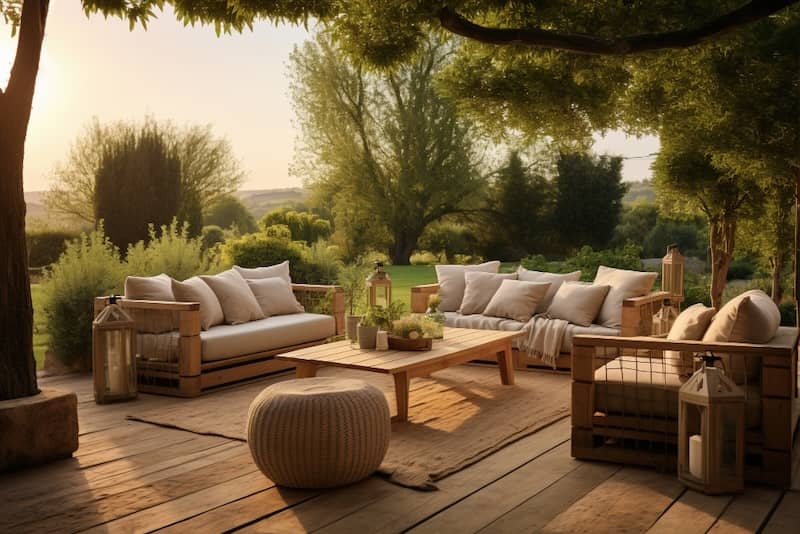
A great outdoor living space starts with a simple question: How do you want to use it?
Some people want a quiet place to read in the evening. Others want room for big family dinners or game-day gatherings. Still others prioritize relaxed weekend mornings with coffee and a view.
But all of the most successful designs start with your habits and the way you live.
That is why a well-designed custom outdoor solution for homeowners feels so natural. It supports the things you already enjoy and provides a better setting for them. The layout works. The materials make sense. The transitions from indoors to outdoors feel easy.
When all of that comes together, your yard becomes part of your home, not disconnected extra space.
Start With Your Daily Life, Not Inspiration Photos
It is easy to get pulled into visual ideas before you think through how the space needs to function.
A beautiful patio photo may catch your attention, but your own outdoor space has to fit your priorities, not match someone else’s that you’ve seen online.
If you love hosting, you need enough room for people to move comfortably between seating, dining, and cooking areas. If you want a peaceful retreat, you may care more about privacy, shade, and soft lighting than a large entertaining zone.
This is where outdoor living experts, specializing in hardscape and softscape can help. A good plan does not chase every trend; it hones in on what you decide belongs in the space and what does not.
That may mean a covered patio instead of an oversized open terrace. It may mean built-in seating near a fire feature, rather than scattered furniture that constantly needs rearranging.
The goal is a layout that supports your real life, not a show home with zero usable space.
Flow Shapes How Comfortable the Space Feels
Flow is one of the most important parts of outdoor design, and it is often the easiest to overlook. But if you don’t get it right, you will notice it straight away. Things like chairs that block walkways or walkways that make guests cut through one conversation area to get to the house will cause frustration.
A layout with good flow guides you naturally from one zone to the next. You can step outside and move comfortably from the back door to the dining area, from the dining area to the lounge space, and from there to a garden path or lawn. That movement feels effortless because your designer can create a space around how people gather and circulate.
Comfort Depends on More Than Furniture
Comfort in an outdoor living space comes from the structure around the furniture as much as the furniture itself. Shade, wind protection, surface temperature, lighting, and privacy all shape whether you will actually use the space often.
If your patio gets full afternoon sun, the best seating arrangement in the world may still sit empty during summer. If your fire feature is placed where the wind constantly blows smoke into the lounge area, the space becomes harder to enjoy. If your yard feels exposed to neighbors, you may not fully relax there.
These are all design issues and are easy to tackle in the planning stages of your project. Don’t wait until your outdoor space is complete to solve them, or you’ll end up with a space that doesn’t suit your needs.
Your Home and Landscape Should Speak the Same Language
An outdoor living space feels stronger when it relates to the architecture of your home.
You don’t have to have everything match exactly, but the space should feel connected. A traditional home may call for more classic paving patterns, layered planting beds, and symmetrical structure. A modern home may feel more cohesive with clean geometry, restrained planting, and simpler material transitions.
This link keeps the yard from looking like an add-on and makes the whole property feel more unified. Even small decisions, such as repeating a color from your home in the hardscape, can create a stronger sense of connection.
This is often where Richmond, VA, residential hardscape contractors add value. You are not just choosing features one by one; they help you create an entire environment that reflects your home and your habits.
Long-Term Quality Should Guide the Design
A lifestyle-based design also needs to hold up over time. If you want a low-maintenance yard, the design should reflect that from the start. If you know your family will use the patio heavily, the materials and layout need to support that level of activity. You don’t want to create your dream space, but make design choices that won’t stand the test of time.
This is also where quality pays off. A well-built path stays level. A properly designed patio drains well. A seating wall remains useful year after year. Trees and shrubs placed with intention grow into the space instead of overwhelming it. You may not think about those things every day, but you’ll feel the difference when the space continues to work well years after the excitement of the initial install has worn off.
Design for the Life You Want to Live Outside
Your outdoor living space should reflect the way you want to spend your time.
That may sound obvious, but it is where the strongest designs soar above the average ones. A family that loves quiet evenings outdoors needs something different from a household that entertains often. A homeowner who values garden views needs something different from someone who wants an open lawn for kids and pets.
Create a space that works for your family and lifestyle. Before you make decisions about surfaces or furniture, it helps to think through a few practical questions. Like, where would it feel natural for your family to gather outside? At what time of day do you expect to use the space most? How much work do you realistically want to put into managing your garden?