
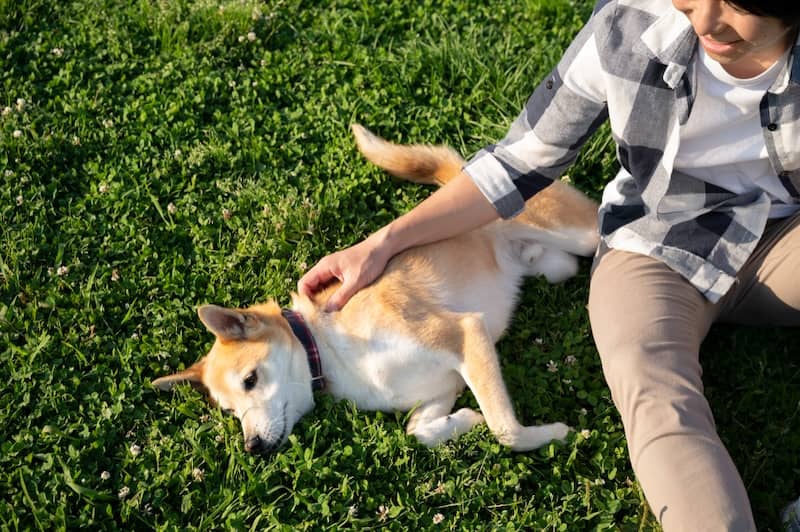
Your pets are loved and cherished family members, and the last thing you want to do is inadvertently put them at risk. So you need to pay close attention to what is on the ground they run across and roll on every day.
Organic lawn products may sound reassuring; after all, the label makes you think this is a cleaner, safer option. In actuality, that assumption can lead you in the wrong direction.
A lawn can receive an organic treatment and still cause problems for pets if the ingredients or application method aren’t pet safe. Some products can irritate paws or upset sensitive stomachs, so you should check them before use, even if they are organic.
To be considered a true pet-safe lawn treatment company, your contractor needs to know what can safely go on your lawn and how to apply it so it doesn’t impact the furry members of your family.
Organic Does Not Automatically Mean Safe
Many homeowners see the word organic as shorthand for harmless.
But that’s not always true. Organic materials might come from natural sources, but natural ingredients can still create irritation or health concerns for pets. A treatment labeled organic may still be too strong or unsuitable for a lawn with heavy pet traffic.
For example, some organic fertilizers contain ingredients that smell appealing to dogs. That can lead to licking, digging, or eating the treated areas before the product has fully settled.
Other treatments may leave residue on the grass that sensitive pets pick up on their paws and then ingest later during grooming. The label alone does not tell you how the product behaves once it is on the lawn.
This is why transparency from your professional softscape service matters. You need to know what they are applying to your yard and how that product might affect your pet.
Protecting Your Pets Starts With Healthier Lawn Practices
Pet-safe lawn care starts with looking beyond the front of the bag or service label. Marketing terms can be reassuring, but they don’t always tell the full story.
What matters more is how a product is formulated and how it’s used. Ingredients, concentration levels, and application timing all play a role in how a treatment affects your lawn and your pets. Some products use organic compounds that can still cause irritation or allergic reactions. Others may be safe in small amounts but become problematic when overapplied or used too frequently.
Misuse is where issues often begin. Applying more than recommended or treating too often can create unnecessary exposure and put stress on your lawn at the same time. When products are used without considering conditions like heat, moisture, or foot traffic, they’re less effective and more likely to cause unintended problems.
A better approach is to choose treatments carefully and use them with intention. Look for products that match your lawn’s specific needs and apply them in a way that solves the issue without overcorrecting. Pet-friendly lawn care is less about quick fixes and more about making consistent, informed decisions that reduce risk over time.
Timing Can Change How Safe a Lawn Feels
Even a carefully selected treatment can become a problem if your contractor applies it at the wrong time. Timing affects how quickly the product settles and how likely your pets are to come into direct contact with it.
Think about a freshly treated lawn on a humid afternoon. If your dog heads outside right away, those damp blades and soft surfaces create more contact than they would after the treatment has had time to absorb and dry. The same product may be manageable under one set of conditions and much less so under another.
This is why thoughtful scheduling is so important. Proper pet-safe lawn care should consider weather, drying time, and how your pet interacts with the lawn. A household with active dogs that spend a lot of time in your yard will need a different treatment plan than one that sees very little activity.
Soil Health Is the Foundation of Pet-Safe Lawns
If you want a lawn that is safer and easier to maintain, start below the surface. Healthy soil supports stronger grass, and stronger grass handles pet traffic with less chemical input. That is better for your yard and better for the animals that use it.
A soil-first approach focuses on building a system that can support itself. This often includes testing nutrient levels, applying balanced fertilizers, watering properly, and using practices like aeration to improve airflow and root development. When the soil is functioning well, grass grows thicker, recovers faster, and is better able to handle stress.
That resilience is especially important in pet households. Dogs create repeated wear, compact the soil, and often use the same areas over and over. A weak lawn will thin out quickly under that pressure, leading to more frequent treatments to correct the damage.
A lawn supported by healthy soil holds up differently. It stays denser, recovers more consistently, and depends less on reactive solutions. Over time, that means fewer treatments and a more stable environment for your pets.
Application Methods Matter as Much as Product Choice
The method used to apply a product can matter as much as what it contains. Uneven coverage or overapplication can create concentrated spots that put pets at risk and your grass under extra stress. A lawn treatment should support even growth, not leave you with scattered hot spots or patches of irritation.
Consider the differences in applications for a popular lawn treatment product, granular fertilizer. If granular fertilizer is spread unevenly and left sitting on the lawn, your pets may come into direct contact with heavier pockets of product. If the lawn is watered incorrectly afterward, the material may not settle the way it should. With liquid treatments, drift and overspray can create other issues if the application is rushed or done in the wrong conditions.
That is why a pet safe application process matters so much. Proper application protects your lawn and reduces your pet’s exposure to the products used.
A Healthier Lawn Starts With Good Choices
Pet-safe lawn care depends on many things, including knowledge, timing, and restraint. It comes from treating the lawn as a living system rather than chasing quick, surface-level results.
An organic label can be one part of that conversation, but it should never be the whole reason you make a decision. If you want real peace of mind, look deeper. The best hardscape and softscape services in Henrico know that the safest lawns for pets are usually the ones built on strong soil, steady care, and clear thinking from the ground up.