
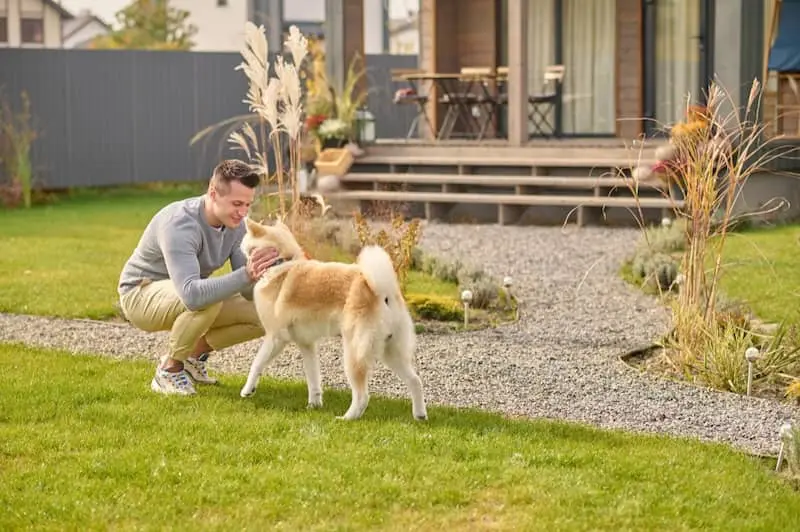
Dogs might be man’s best friend, but that doesn’t mean you have to put up with your dog digging through your flower beds or tearing up your grass.
You may be dealing with a softscape design problem as much as a canine behavior problem. Dogs dig for reasons that make sense to them. They may be chasing a scent or creating a spot that feels comfortable and secure. You can fight that instinct every day, or you can shape your luxury landscape around it and create a space both you and your dog can enjoy.
Working with an outdoor living expert to create a hardscape and softscape design that meets both your needs and your pet’s.
Instead of treating your dog like an obstacle, you can create a yard that works for your dog. With the right mix of durable hardscape, resilient planting, and designated activity zones, you can protect your lawn and keep your outdoor space attractive and functional.
Why Dogs Dig in the First Place
Dogs rarely dig at random. They usually return to the same areas because those spots offer something they want.
It might be an area of soft soil that is easier to break into. Dogs can get too hot in sunny patches, so they may seek cooler, shaded ground. Or perhaps your four-legged friend is enticed by the scents of your garden, like mulch or hidden critters burrowing beneath the soil.
Learning why your dog spends time in certain places in your yard will give you clues about what you need to change.
If your dog always digs near a fence line, that area may need a stronger border or a more durable surface. If digging occurs around newly planted shrubs, you may need to reconsider soil exposure and plant protection during the early stages of growth.
When you understand the cause of the damage, you can build a landscape that redirects your dog’s behavior rather than reacting to it afterward.
Design Around Behavior, Not in Spite of It
Watch how your dog uses your yard. Notice where your dog runs, rests, and investigates. Those movement patterns tell you where turf will wear thin, where flower beds will be vulnerable, and where hardscape features can relieve pressure on softer areas.
For example, many dogs create their own paths between the door and their favorite shade spot. If you leave those routes as lawn, you will likely end up with worn tracks and muddy patches. If you acknowledge that traffic pattern and install a path with pavers or stepping stones, you create a cleaner and more durable route that supports how your dog already uses the space.
This proactive approach often improves your yard’s appearance. The design feels intentional because it responds to real use rather than trying to force a perfect lawn onto an active pet environment.
Use Hardscapes to Protect High-Traffic Areas
Adding a bespoke hardscape installation is one of the most effective ways to reduce damage from your dog’s digging. Features such as patios, stone borders, paver walkways, and edging create a structure that withstands constant activity. They also reduce the amount of exposed soil that invites digging.
If your dog tends to dig near garden beds, stone or metal edging can serve as a clear, durable boundary. If your dog races across the same stretch of yard after every squirrel or delivery truck, a hardscape path can absorb that wear. If your dog spends long periods outdoors, a paver patio or shaded stone zone can provide a cool, resting spot that keeps your pet off delicate turf.
The intention is not to hardscape every inch of the yard and get rid of all the greenery. Instead, the goal is to place durable surfaces where they solve recurring problems and support the overall flow of your outdoor space.
Choose Softscapes That Can Handle Real Use
Some plants and lawn surfaces recover better than others. If you are designing around your dog, you should choose softscapes that can tolerate more activity and occasional rough play.
Hardy groundcovers can work well in areas where traditional turf struggles. Adding low-growing, durable plants near borders or under trees can reduce exposed dirt and create a more finished look. In other areas, a stronger turf variety may give you better recovery from repeated paw pounding.
Shade also matters. Dogs often dig to escape the heat and reach cooler ground, so a yard with shaded areas can help reduce that urge. Trees, pergolas, or thoughtfully placed shrubs can make the yard more comfortable during hot months. That comfort supports your dog and protects your softscape by reducing stress behavior.
You could consider adding shaded rest zones where your dog naturally settles during the hottest part of the day. A cooler yard reduces the urge to dig for relief and helps preserve lawn quality.
Create a Place Where Digging Is Allowed
Some dogs have a strong digging instinct that is unlikely to disappear completely, no matter what other distractions you provide. If your four-legged friend is a compulsive digger, one of the smartest solutions is to give your dog a designated place to dig.
A small digging zone can be tucked into a quieter part of the yard and filled with loose sand or softer soil. You can place toys there or bury a few safe distractions to help train your dog to associate that space with play. This works especially well when the digging area sits close enough to the main activity zone that your dog still feels connected to the household.
From a landscape perspective, this trade often pays off. One contained digging area can save multiple beds and foundation plantings from repeated damage.
Solve the Problem at the Entry Points
A lot of yard damage starts at transition zones. Back doors, gates, and corners near patios often take the hardest hit because they are hubs for movement and excitement. These are the places where dogs launch into the yard, pivot sharply, and track the same route over and over.
That is why entry points benefit from extra design attention. You may need wider hardscape pads outside doors or reinforced corners to cope with the extra movement.
If you ignore those pressure points, they usually become the first areas to fail. But if you design with them in mind, your whole yard tends to perform better.
Make Maintenance Easier, Too
A dog-friendly yard should also be easier for you to maintain. That means choosing materials and plantings that do not demand constant repair or replanting after every burst of play.
Low-maintenance design often includes simpler design choices and surfaces that clean up easily. It may also include mulch alternatives in problem spots where loose material tends to scatter. You want a landscape that can absorb real life without looking worn out after a week of normal use.
A Better Yard for You and Your Dog
A well-designed yard can support your dog without sacrificing style. Your ideal outdoor space can look polished and be pet-friendly at the same time; when you combine durable hardscape with thoughtful planting and behavior-aware layout decisions, you create a landscape that works better for both of you on every level.
You do not need a perfect lawn with no paw prints to have a beautiful property. But you do need a design that reflects how you and your pet use your yard. Aligning both of these ideas gives you a space that is easy to share, enjoy, and maintain.
Video
Infographic
A digging dog can wreck your lawn, garden beds, and weekend plans in no time. Check out the infographic below for eight landscape fixes that protect your yard while still giving your pup plenty of room to play.
