
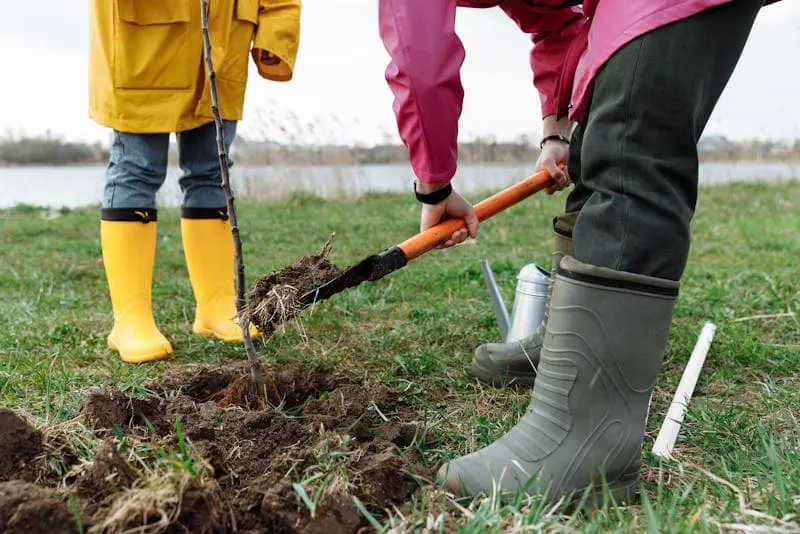
Planting a tree seems simple at first. Pick a good spot, dig a hole, set the tree, and water it. But a lot can go wrong. Poor placement, shallow roots, drainage issues, and bad timing can turn a promising investment into a slow decline.
That is one reason tree planting deserves more thought than many homeowners give it. A tree affects your property for decades. It shapes shade patterns, frames views, changes drainage, and influences the health of nearby lawn and planting beds.
If you want that tree to grow strong and look natural in the landscape, you need to do more than a quick planting job. To get this job done right, you need a plan that considers the entire property.
If you search for a “top-rated landscaper near me,” you can find a professional who will help you avoid the most common mistakes when planting trees in your yard.
Why Tree Planting Mistakes Show Up Later
Most homeowners don’t see tree planting problems on day one.
In fact, a newly planted tree can seem fine for months, sometimes even longer, before signs of trouble start to show. Over time leaves may thin out, branches may die back, and growth may stall. Even though it may take you time to notice those symptoms, the root cause can often be traced back to something that happened at planting.
Because problems don’t show up right away, mistakes with trees often become expensive over time. You may spend significant money on a quality tree, irrigation, mulch, and seasonal care, only to find out the original planting depth was wrong or the location never suited the tree in the first place.
When you start this project with a local landscaper near your home, you know they have the bigger picture in mind from the beginning, which helps you avoid hidden problems before they take hold.
Choose the Right Location
A tree needs the right amount of room, sunlight, and drainage to be healthy.
But it also needs to fit the way your property functions. A tree that looks perfectly sized in a nursery container can eventually outgrow the spot you had planned for it.
A shade tree planted too close to the house can interfere with the roofline or foundation over time. A flowering ornamental placed in heavy shade may never perform the way you expect. While the fruit itself is often safe, certain parts of fruit trees, like pits, seeds, or leaves, can be harmful to pets, especially if they are left within reach.
This is why tree placement and species are major considerations. Planting a tree isn’t a short-term commitment; it will grow for years in your yard.
Plant at the Right Depth
One of the most common tree-planting mistakes is planting the tree too deeply.
That often happens because homeowners assume the top of the root ball should sit flush with the surrounding grade. In many cases, the tree needs to sit slightly higher so the root flare stays visible and the base has room to breathe.
When you plant your tree too deeply, water and soil build up around the trunk. That can lead to rot and weak growth, resulting in a long-term decline. It also encourages roots to grow in patterns that do not support a healthy structure. Whilst the tree may survive for a while, it usually struggles and won’t live as long as it should.
Planting depth is a detail that a complete softscape maintenance services team understands well. A professional crew doesn’t treat the tree like an isolated task. They install it as part of a larger environment that must function properly, considering grading, drainage, and overall yard design together.
Examine the Soil Condition
A healthy tree starts in healthy soil. Rocky dirt, older compacted lawns, and areas with poor drainage can all create problems for your new tree’s roots.
If the soil is too dense, roots struggle to spread. If the site stays wet after rain, roots can suffocate. If the soil dries too quickly, a young tree may never establish enough stability to grow with confidence.
That is why tree planting works best when a landscaping expert has evaluated the site before the shovel goes into the ground. The right fix may involve improving drainage, loosening compacted soil, adjusting grade, or choosing a different planting area entirely.
Without the proper preparation, even a strong nursery tree can end up fighting conditions that were never in its favor.
Consider Water Needs
Newly planted trees need consistent watering, but it must be the right amount.
Too little water leaves the roots dry and weak. Too much water can create the same kind of stress. This is one reason tree planting often fails in properties where watering is based on guesswork rather than observation.
You can avoid many issues by thinking about irrigation before planting.
The tree should fit into a broader watering plan that accounts for nearby turf, planting beds, and hardscape runoff. A tree in a mulched island has different needs than a tree planted in the middle of a lawn.
Uniform watering across trees, turf, and planting beds often creates imbalance, leaving some areas overwatered and others under-watered.
Mulch, Stake, and Care for Young Trees
Even the finishing touches around a tree can create problems if they are handled poorly.
- Mulch piled high against the trunk traps moisture and invites decay.
- Staking that stays on too long can weaken the trunk by preventing natural movement.
- Heavy pruning right after planting can reduce the tree’s ability to establish itself.
Good aftercare keeps things simple.
Mulch should sit in a broad ring around the tree, not piled against the trunk. This helps hold moisture in the soil while protecting the root zone from heat and mower damage.
Only use stakes when the tree truly needs them, such as in areas with strong winds or unstable root balls. They should also come off once the tree can support its own weight.
Early pruning should focus on damaged or clearly problematic branches. Most young trees need time to settle in before they benefit from more structural shaping.
These details may seem small, but they can have a lasting effect on how the tree grows. If you don’t have the greenest thumb, hiring a professional could be the difference between your tree thriving or withering.
Include Tree Planting in a Complete Landscape Plan
A tree changes the landscape around it. The shade shifts lawn performance, roots can influence bed design, and the canopy spread changes how the house looks from the street and how outdoor spaces feel during the hottest months.
That is why tree planting works best when it is part of full-service landscaping rather than a stand-alone weekend project.
A full plan helps you coordinate tree placement with all the other features of your outside space. Instead of dropping a tree into open space and hoping it works, you create relationships between the tree and the rest of the yard.
That often leads to stronger curb appeal and better long-term performance.
A Better Result Starts With Better Planning
When you choose the right tree, put it in the right place, and support it with proper soil and care, it can become one of the most valuable parts of your landscape. It adds shade and lasting beauty.
If you want a tree to thrive, though, you need to look beyond the planting hole. Think about the land around it, the drainage beneath it, and the way the property will grow around it. That broader view is what helps a young tree turn into a lasting part of your home’s landscape.
Working with a provider that understands both installation and upkeep can help maintain the trees across the entire property as they grow and develop. For homeowners looking to simplify that process, it can be helpful to search for a “full service residential hardscape and softscape maintenance near me” to manage both the structural and living elements of the landscape together over time.