Your new yard is a blank canvas, all ready for you to make your own. It’s tempting to jump right in with a lush lawn or decorative flower beds, but this would be a mistake.
Before you start digging in, take a step back. The most successful landscapes don’t begin with plants; they start with structure. That means your hardscaping comes first.
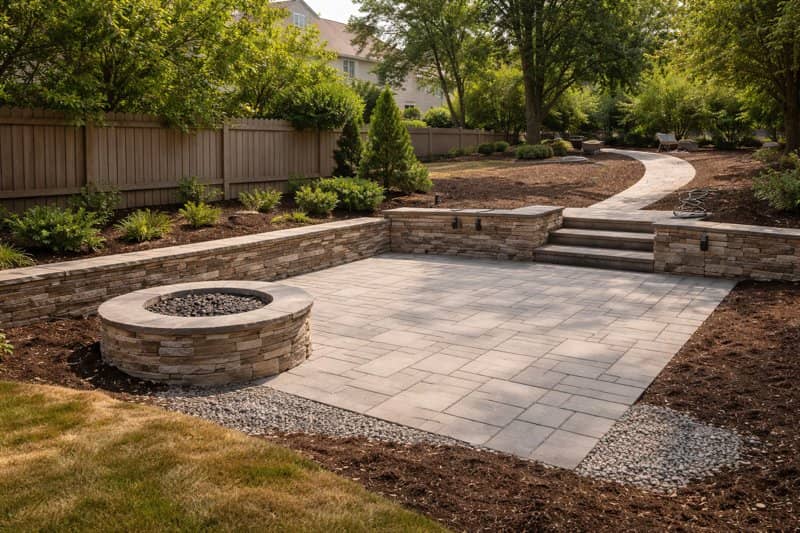
Hardscaping includes the permanent features of your outdoor space, like patios, walkways, driveways, fire pits, and seating areas. These elements define how you move through and experience your landscape. They also determine where water drains, how your yard handles elevation changes, and whether your plants will thrive or struggle.
If you skip ahead to planting before installing these foundational features, you’re likely to undo your progress later. Installing hardscape after the fact can damage plantings, compact your soil, or disrupt grading, all of which cost more time and money to fix.
Here’s why you should use a local expert hardscape and softscape designer for new-builds to create a bespoke design for your new home. They will start with the hardscape features, incorporate gorgeous softscaping, and leave you with a masterpiece.
Hardscapes Shape the Flow and Function of Your Space
Think of hardscape as the template of your landscape. It creates form, guides movement, and provides the structure in which your plants will grow. Without that framework in place, your landscaping could feel disjointed or cluttered, like decorating a house before it has walls.
If your patio isn’t in yet, or your walkway isn’t planned, how do you know where to leave room for shrubs or garden beds? You may end up crowding the wrong areas or shading out sun-loving plants. When you install hardscape features first, every area of the yard has a clear purpose and place in an overall design.
In newly built homes, especially in areas with varied lot terrain, retaining walls and steps are often necessary to create usable space. These features prevent erosion and set visual boundaries. Until you have them in place, it’s challenging to make wise decisions about plant placement or soil preparation.
Drainage and Grading Come First for a Reason
Before you add anything green to your yard, you need to understand how water moves across it. Hardscape installation for new homes usually involves grading, which is shaping the ground to encourage proper runoff and prevent standing water. That step protects your home’s foundation and your future garden beds.
Patios and walkways need to slope gently away from the home. Retaining walls may need built-in drainage systems. Driveways must be designed to shed water effectively. When you address these challenges early with the right hardscaping plan, you avoid unpleasant surprises later, such as flooded mulch beds or soggy lawn patches.
Once your hardscapes are installed and your grading is complete, your planting zones become clearer. You’ll know where moisture collects, which areas get the most sun, and what types of plants will thrive.
Avoid Damage to Your Softscapes
If you install plants too early, the heavy equipment used for patio or wall construction can crush them or compact the soil around their roots. This kind of disturbance can set back growth or kill young plants entirely. It also wastes the time and money you spent on planting them in the first place.
When you prioritize hardscape first, you protect your landscape from damage. You also avoid needing to redo irrigation lines, move mulch, or restake trees that were in the way of construction. The correct order of operations keeps your project efficient and your plants safe.
Once the hard surfaces are in place, you can start layering in greenery and only do the job once.
A Cohesive Landscape Starts with a Plan
Landscaping your new home should feel like you’ve built a beautiful extension of your living space. You don’t want it to be a series of disconnected ideas haphazardly put together.
When you lead with structure, you give your yard an intentional layout that complements your home’s architecture and your lifestyle.
A smart landscape timeline will begin with site preparation and grading. Once you set the proper foundation, everything flows more easily.
Next up is your bespoke hardscape installation. Now is the time to add patios, walkways, or retaining walls to personalize your new build home and create your own idyllic retreat.
Once you are done with the hardscape, add irrigation features such as sprinklers and lighting infrastructure. These touches will make your garden usable at night and during the day, and make future maintenance easier without disturbing your plants.
The final step in your timeline is soil preparation and planting. This is the fun part, and where your garden will start to look like you have imagined.
Following a cohesive plan will let you have the garden of your dreams where you can relax and unwind, rather than the nightmare of a mish-mashed mess.
Build Beauty from the Ground Up
Every lasting landscape begins with a solid foundation. When you take the time to install the hardscape in your new home before planting, you set up your entire yard for success.
You avoid damage, save time and money, and create a space where every plant enhances the structure rather than competing with it.
Patience pays off when you follow the proper order. Start with structure, and you’ll end up with a landscape that looks intentional and adds value to your home.
If you’re building or renovating in the Richmond area, working with professionals who understand can make all the difference. Experienced hardscaping services in Richmond, VA can help you design and install hardscaping elements that support long-term health of your outdoor space from the ground up.
Video
Infographic
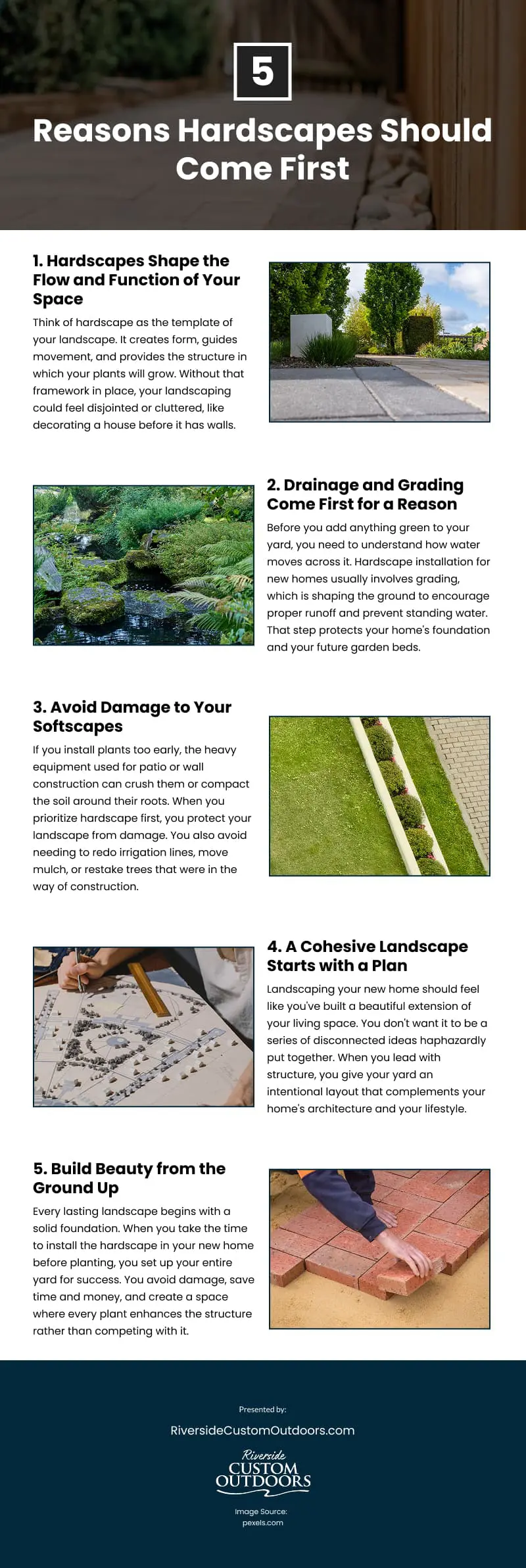
When designing a new yard, it’s tempting to start with plants and greenery. But the most successful landscapes begin with a strong structural foundation — which means prioritizing your hardscaping first. Read on in this infographic to learn why hardscape should lead your landscaping plan.