Not every home comes with a large backyard, particularly in more urban areas or new-build neighborhoods. You may have limited outdoor space.
But a smaller lot doesn’t have to feel restrictive. With thoughtful design choices, even a compact outdoor space can feel open, inviting, and surprisingly beautiful.
The secret is having a deliberate design. Small yards benefit from smart planning more than larger spaces do. Every plant, hardscape element, and lighting feature has a bigger impact when space is limited. These seven top tips will help you make the most of a narrow side yard, a modest backyard, or a compact courtyard patio.
1. Use Vertical Space to Your Advantage
When you don’t have much ground space to work with, look up. Vertical elements naturally draw the eye upward, like columns on a building or vertical stripes on pants, creating a sense of height that can make even a small garden feel larger than it really is.
Climbing plants like clematis, climbing hydrangea, or Confederate jasmine can turn an ordinary fence into a lush green feature. Tall ornamental grasses and narrow trees, such as Italian cypress or Sky Pencil holly, bring structure and height without taking up much of your valuable space. Adding wall-mounted or stacked planters can add greenery at different levels while keeping the ground below open and uncluttered.
Consider a bespoke hardscape installation to enhance this effect further. A pergola or overhead trellis helps define the space above, giving a small garden the feel of an outdoor room rather than a cramped area. Surprisingly, the sense of having a ceiling often makes the space feel larger, not smaller. It works especially well on compact patios where the hardscape already creates a clear edge.
Combine vertical plantings with a thoughtfully placed structure, and you add depth and dimension to an outdoor space that might otherwise feel flat.
2. Choose Plants That Create Depth
Plant selection plays an even bigger role in small gardens than it does in larger ones. When every plant sits at the same height and fills every available space, it can feel crowded. A layered planting approach creates depth and makes the space feel more open.
Start by creating a focal point at the back of the garden. A standout ornamental tree, a colorful flowering shrub, or a thoughtfully placed container gives the eye somewhere to travel. From there, add mid-sized plants through the middle and lower-growing ground covers along the front edge. This kind of layering mirrors the way larger landscapes naturally unfold, helping the eye perceive more depth than the space actually contains.
In central Virginia, native plants like Virginia sweetspire, dwarf fothergilla, and blue star amsonia provide seasonal color and structure without overpowering a smaller garden. They’re also well adapted to local growing conditions, which means they establish reliably and look great from spring through fall.
It’s also important not to fill every inch of space. Areas of gravel, mulch, or open ground give the eye room to rest and help a garden feel balanced. In many cases, a little empty space makes a small garden feel much larger.
3. Brighten Things Up With Strategic Lighting
Lighting has a huge impact on how outdoor spaces feel, whatever the time of day. In a small yard, it can be one of the most effective ways to create an open and airy ambiance.
During the day, lighter-colored surfaces help maximize available light. Cream-colored pavers, white gravel, and light limestone all reflect sunlight, keeping your garden from feeling dark or enclosed. This is especially helpful in north-facing gardens, where direct sunlight is limited, and brighter materials can make a noticeable difference.
After sunset, lighting takes on a different role. Well-placed uplights and path lights highlight important plants and architectural features, creating depth and visual interest. Ground-level lighting draws the eye outward and upward, while poorly placed overhead fixtures can make a space feel smaller.
Even a simple lighting plan can have a dramatic effect. Highlighting a few key features, such as an ornamental tree or a feature wall, can make a compact garden feel polished and inviting long after the sun goes down. For many homeowners, the yard’s appearance is just as important at night as it is on a sunny afternoon. You still want your outdoor space to feel inviting and comfortable once the sun has set.
4. Keep Hardscape Lines Clean and Simple
Overly detailed, fussy hardscaping can make a small yard feel even smaller, like seeing a mantle full of knick-knacks, photo frames, and doilies rather than a crisp, clean space.
In a compact outdoor area, simpler is usually better. The goal is to create a pure, open look that allows space to breathe. Less is more in this scenario.
Instead of small pavers and busy patterns, consider larger-format materials. Large stone slabs or oversized pavers create fewer visual interruptions, which makes the space feel more open. A simple patio with a clean border often works far better in a small space than a mix of different materials competing for attention.
The direction of your hardscape matters, too. Lines that extend away from the house naturally pull the eye outward and make the yard feel deeper. Diagonal layouts can have a similar effect by creating a sense of movement across the space rather than emphasizing its boundaries.
Curved pathways are another clever design tool. When a path bends around a planting bed or disappears behind a shrub, it suggests there’s more garden beyond what you can immediately see. That illusion of extra space can make a surprising difference.
In a small space, what the eye believes is often just as important as the square footage you actually have, and a local patio hardscape expert will create the perfect patio for your space.
5. Add Reflective Surfaces
Designers have long used mirrors indoors to make rooms feel larger, and the same approach works surprisingly well outdoors.
A weather-resistant mirror mounted on a fence or garden wall can create the illusion of a window or opening into another space. By reflecting light and surrounding plants, it adds a sense of depth that can make a compact garden feel much larger. This works especially well in enclosed spaces where fences or walls define the view. For the best effect, position the mirror so it reflects a planting bed, a focal tree, or another attractive feature rather than a blank wall or a utility area.
Water features can create a similar effect while adding another layer of interest. A small reflective pond, a shallow rill, or a simple basin fountain helps bounce light around the garden, creating a stronger sense of depth. The feature doesn’t need to be large to make an impact. Even a modest stone basin with a small recirculating pump can add the sound of moving water and a reflective surface that makes the space feel brighter, more open, and more inviting.
6. Create Zones That Feel Intentional
Breaking a small yard into distinct zones might seem like it would make the space feel smaller. In reality, it often does the opposite. Giving different areas a clear purpose encourages movement through the space and makes it feel larger.
A seating area, a planting bed, and a simple focal feature can create a much stronger sense of space than one uninterrupted stretch of lawn. These separate areas create a feeling of wonder. As you move from one part of the garden to another, the experience feels longer and more engaging than its actual size would suggest.
The key is to define those zones without adding bulky structures that take up valuable space. Installing low hedges or a line of stepping stones can create subtle boundaries while keeping the garden open. Use consistent materials and gentle transitions so the different spaces feel connected rather than chopped up.
Flexible furniture can make a big difference as well. Lightweight chairs and movable tables allow you to adjust the space as your needs change throughout the year. A cozy setup for morning coffee can easily become seating for guests in the evening. That flexibility helps a small outdoor space feel adaptable instead of locked into a single layout.
7. Layer Softscapes for Color and Texture
Color and texture do a lot of the heavy lifting. The right planting palette can make a space feel full of life and depth, rather than flat or empty.
Color temperature is especially helpful here. Cool tones like blues, purples, and silvers found in plants such as lavender, salvia, Russian sage, and lamb’s ear tend to recede visually, making the back of the garden feel farther away. Warmer colors like reds, oranges, and bright yellows do the opposite, pulling the eye forward. Placing cooler tones toward the back and warmer tones up front creates a sense of depth that feels almost like extra space.
Texture also brings in another layer. Mixing fine-leaf plants and airy ornamental grasses like feather reed grass or Japanese forest grass with broader-leaf plants like hostas or rodgersias creates contrast that keeps your eye moving. When a garden rewards closer inspection, it naturally feels larger than one you take in all at once.
Staggering bloom times through the seasons also helps keep things interesting. Instead of one big spring moment followed by a lull, the garden will stay visually active and evolving throughout the year.
Make Every Square Foot Work for You
When it’s designed well, a small yard can become one of the most personal and rewarding outdoor spaces you have. You don’t need more square footage to pull it off, either. You do need thoughtful material choices, intentional design, and a clear understanding of how light, scale, and layering work together.
When you work with a team that specializes in both softscape and hardscape solutions for homeowners, every element gets planned as part of a single, cohesive space. Choose an established professional team that offers top tier outdoor solutions for homeowners. They will focus on creating outdoor areas that feel curated and considered, and will always be glad to help you make the most of every inch you have.
Video
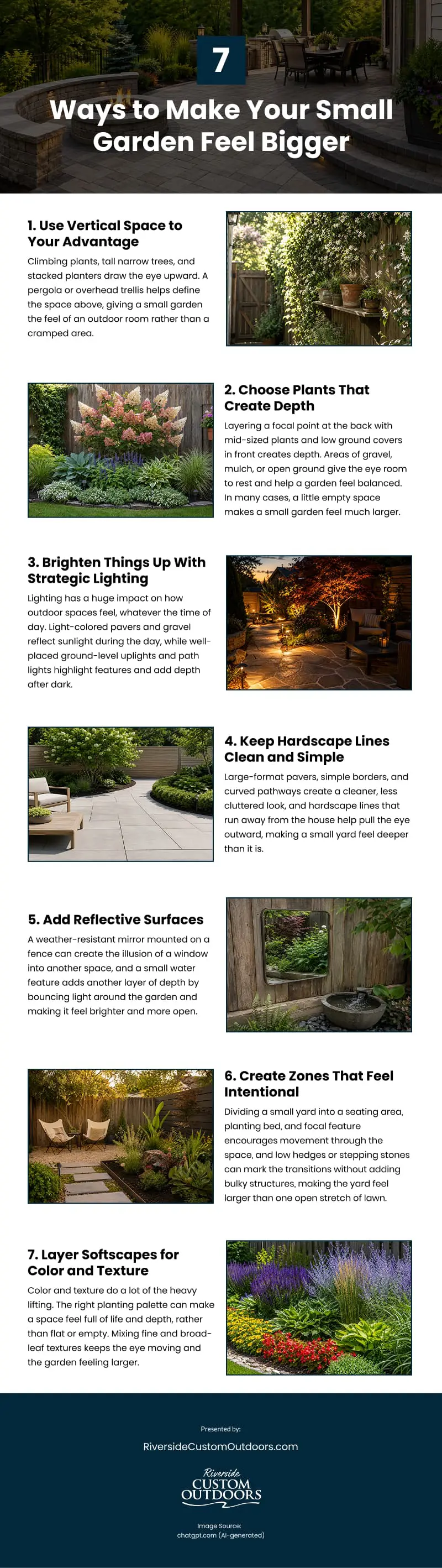
Infographic
A small garden doesn’t have to feel cramped; a handful of deliberate design choices can make it feel far more open and spacious. Explore seven ways to make your small garden feel bigger in this infographic.