
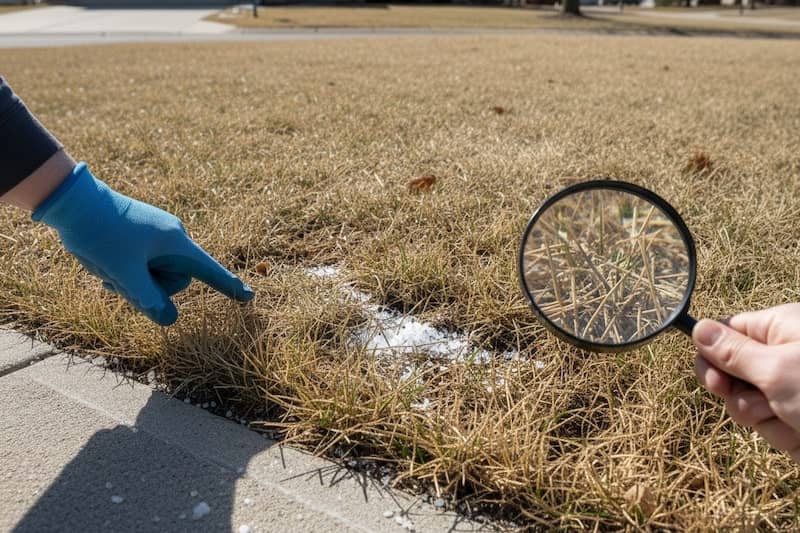
If your lawn suddenly looks discolored, patchy, or strangely brittle after the winter months, it may be suffering from salt damage. And if you’re like most homeowners, you may not even realize it’s happening until it’s already affecting the health of your grass and soil.
Salt might seem harmless when you scatter it on your driveway or use products with sodium-based chemicals, but your lawn tells a different story. Grass, like most plants, is susceptible to excessive sodium. Once the soil becomes saturated with salt, it disrupts how your grass absorbs water and nutrients. The results can be frustrating and costly if left unchecked.
Here’s how to spot salt damage on your lawn, what causes it, and how to prevent or repair it (either going it alone or with the support of a high-standard residential outdoor maintenance company) to get your lawn back up to the way you prefer.
What Does Salt Damage Look Like?
Salt damage often reveals itself through subtle changes at first, but those minor symptoms can quickly turn into evident deterioration. You’ll notice your grass turning yellow or brown, especially along sidewalks, driveways, or road edges. These areas are most vulnerable because that’s where snow, ice melt, and road salt tend to accumulate or run off.
Unlike drought stress, where blades may wilt, salt damage causes crisping or curling of the grass blades. The grass may feel crunchy, and you might even notice dead patches that form in a linear path along walkways or driveways, mimicking the path of salt exposure.
Another clue? The soil in those areas may appear crusted with a white residue. That’s a strong indicator that salt accumulates at the surface and compacts the soil beneath.
Why Is Salt Harming Your Lawn?
The main culprit behind salt damage is sodium chloride, or rock salt. It’s a popular and inexpensive solution for melting ice on roads, sidewalks, and driveways, but it has a damaging effect on your soil chemistry. When snow or ice melts and carries the salt into your lawn, it creates a toxic environment for plant roots.
Salt affects your lawn in two key ways:
Osmotic Stress
Salt in the soil interferes with your grass’s ability to absorb water, even when water is available. This creates a drought-like condition that dries out the roots.
Chemical Toxicity
High concentrations of sodium and chloride ions can poison grass and beneficial microbes in your soil. The result? Your lawn weakens, thins out, and becomes more vulnerable to disease, pests, and further decline.
You might also experience salt damage if you’re using certain weed control products or fertilizers with high salt content. Over-application of these can cause similar symptoms to those caused by deicing salt, so don’t assume your lawn is immune just because it’s not near a sidewalk.
How to Confirm Salt Damage
If you’re unsure whether salt is the cause of your lawn problems, look at the timing and location of the damage. Does the yellowing appear in early spring, right after the snow melts? Is it concentrated near areas where salt or snowmelt runs off? That’s a strong indication of salt damage.
To be sure, you can perform a simple DIY soil test or send a sample to your local extension service. These tests measure salinity and pH levels, which can confirm if salt is creating an imbalance in your soil.
Also, compare areas of damage to parts of the lawn covered during the winter, perhaps shaded by a car, tarp, or evergreen trees. If those covered areas stayed green while the rest yellowed, that contrast can help you confirm the cause.
What Can You Do About It?
If you catch salt damage early, your lawn may bounce back with some targeted care. The first and most important step is leaching the salt from the soil. That means deeply watering the affected areas to help flush sodium out of the root zone. You’ll want to do this slowly over several days, allowing the water to percolate deeply without running off.
If the damage is extensive, you may need to reseed or resod the affected patches once the salt has been flushed out. Before doing so, amend the soil with organic matter or gypsum to help displace sodium and restore the soil’s structure. Gypsum is especially useful because it adds calcium, which counteracts the adverse effects of sodium.
Remember to keep the mower blade high. Cutting stressed grass too short can cause additional trauma and slow recovery.
How to Prevent Salt Damage in the First Place
While some exposure to salt is hard to avoid, especially during icy winters, you can take steps to protect your lawn in advance. The most effective prevention starts with physical barriers. Use plastic snow fences, burlap, or landscape fabric to shield the edges of your lawn near roadways or walkways. These materials prevent salt spray from vehicles or plows from seeping into your turf.
Next, consider switching to a lawn-safe deicer. Look for products that contain calcium, magnesium acetate, or potassium chloride, which are less harmful to plants. These may be slightly more expensive than rock salt, but the long-term savings on lawn repair and reseeding often make it worthwhile.
If you need to use traditional salt, shovel snow away from grass borders before applying it. That way, when the snow melts, it doesn’t carry a salty slurry onto your lawn.
Lastly, improve your lawn’s resilience by keeping it healthy throughout the year. A thick, dense lawn with well-aerated soil is less likely to suffer long-term damage from brief salt exposure. Strong roots and healthy microbial activity go a long way toward buffering environmental stress.
This might all seem like a lot of work to commit to, and if you don’t think you have time to consider carrying out all of these tasks on top of everything else on your to-do list, a professional softscape service can take care of it all for you.
Watch Out for Salt from Unexpected Sources
Not all salt damage comes from winter maintenance. If you have a water softener system discharging brine onto your lawn, that’s another common source of salinity buildup. Likewise, overuse of synthetic fertilizers and herbicides can tip the balance in your soil toward excessive salts.
If you’ve recently switched lawn products or adjusted irrigation systems, look for signs of stress that don’t align with seasonal salt exposure. Sometimes, the problem isn’t in your driveway; it’s in your shed or hose.
Don’t Wait to Act
The longer salt sits in your soil, the more damage it can do. Waiting for spring rains to fix it naturally isn’t always enough, especially in a region with inconsistent rainfall or poor soil drainage. When your grass shows signs of stress, the root system may already be in trouble.
Addressing the issue proactively not only saves your lawn but also saves you time and money. Whether you’re a hands-on homeowner or rely on professional residential lawn care, knowing how to identify and manage salt damage is essential for maintaining healthy, vibrant turf.