
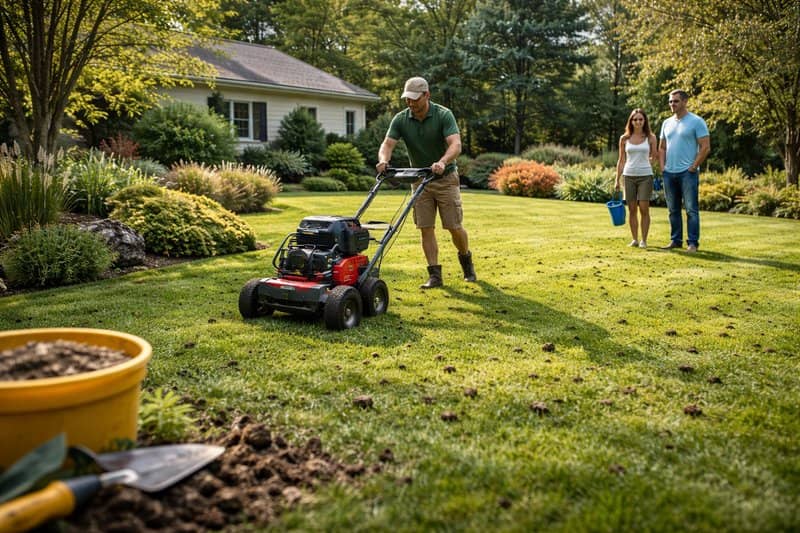
If your lawn looks patchy or dull despite regular watering and mowing, the issue may not be on the surface. It could be what’s happening underneath.
Soil compaction is one of the most common causes of lawn underperformance, especially in areas with clay soil, frequent foot traffic, or dense turf. That’s where core aeration comes in.
Core aeration is the act of removing plugs of soil from the lawn. This process relieves any compaction and allows nutrients, water, and air to penetrate deeper into the root zone.
It may sound simple, but this technique delivers big results. Whether you’re preparing your lawn for spring growth or recovering from a harsh summer, aeration provides your lawn with the breathing room it needs to thrive.
The Hidden Threat to Healthy Turf
Over time, your lawn’s soil naturally becomes compacted. Foot traffic, lawn equipment, and even rainfall can compact soil particles tightly together, reducing the space for air and water to flow. Compacted soil limits root growth, leading to increased runoff and surface stress.
On the surface, you may notice signs such as thin grass or standing water. These are red flags that your turf isn’t getting what it needs below ground. Even high-quality sod or irrigation can’t solve the issue if the roots are trapped in dense, suffocating soil.
That’s why core aeration is a proactive way to combat the issue. By mechanically removing plugs of soil (typically two to three inches deep and about half an inch wide), you restore space in the ground for vital elements to reach down to the roots. This process literally unlocks your lawn’s full potential.
Boost Root Health and Growth
The real magic of core aeration lies in its benefits to root development. When roots have more space, they grow longer and stronger. Deeper roots mean better drought resistance and a lawn that retains its color longer during periods of stress.
After aeration, those removed plugs break down over time, enriching the topsoil layer and introducing organic matter. As this happens, the holes left behind create micro-channels that guide water and fertilizer directly where your lawn needs it most.
You’ll notice that the grass starts to fill in more evenly, and weak areas begin to recover. It’s a long-term investment that creates a stronger, more self-sustaining lawn with fewer inputs over time.
When to Aerate for Maximum Impact
There is no singular ideal time to aerate. The best time depends on the type of grass you have and your local climate. Even here in Virginia, there isn’t a standard time. You’ll want to base your decision on the variety of grass you have.
The most common lawn grasses here are cool-season grasses, such as fescue or bluegrass. If you have these varieties, you should aerate in early fall and early spring. These periods offer the right balance of moisture and temperature to promote healing and regrowth.
But if you have warm-season grasses, such as Bermuda or zoysia, late spring to early summer is typically the optimal time. That’s when your turf is actively growing and best equipped to recover from the aeration process.
If you’re unsure, contact a premium residential lawn maintenance service near you. They can advise you on the best care for your specific grass type.
Avoid aerating your grass during periods of dormancy or drought. Your lawn needs some active growth to take full advantage of the open soil. Coordinating aeration with seeding or fertilization can also enhance results, providing your lawn with everything it needs to rebuild stronger and healthier.
Aeration Outperforms Other Lawn Treatments
You might be tempted to rely on surface-level treatments, such as fertilizer or weed control, but without healthy soil beneath, those efforts won’t yield the desired results.
Aeration works with your lawn’s natural systems to promote lasting health from the roots up. Aeration is a foundational treatment, not an optional add-on, and you will need it for your lawn to look its best.
A healthy aerated lawn will absorb water more efficiently, reducing waste and preventing puddles. Nutrients remain in the root zone, staying put instead of washing away, which means that any fertilizers applied are more effective. Instead of masking issues with temporary fixes, core aeration addresses the root cause, literally.
Additionally, as a mechanical process, aeration alone is a very pet-friendly lawn care option. However, remember to inform your softscape service provider if you have any furry family members, so they can avoid using products that may pose a problem for them.
How to Know If Your Lawn Needs Aeration
Not every lawn needs to be aerated annually, but many benefit from it at least every other year. If you notice that your soil feels hard underfoot or that water tends to run off instead of soaking in, your lawn is likely due for aerating.
You can also do a quick test. Take a screwdriver or pencil and try pushing it into the soil. If it takes effort to go more than an inch or two deep, the ground is likely compacted. Other signs include dry spots, fading turf despite irrigation, or a spongy thatch layer on top.
Aeration may not solve every issue overnight, but when paired with seasonal feeding and overseeding, it is a critical part of any long-term lawn care strategy.
Partner with Professionals for Best Results
While DIY aeration tools exist, professional equipment offers deeper, more consistent results across your entire lawn. A comprehensive softscape maintenance package from a local company will utilize their trained crews, who know how to assess soil type, grass health, and weather conditions to time the process precisely.
You also gain peace of mind knowing your irrigation lines, landscape features, and underground utilities will be respected. A poorly executed aeration job can do more harm than good if it’s done at the wrong time or with the wrong approach.
With a professional eye on your lawn, aeration becomes part of a larger plan that supports year-round health, not just a seasonal fix.
A Simple Process with Complex Benefits
Core aeration is one of the most effective steps you can take to enhance your lawn’s appearance and resilience. It’s a simple process that produces many benefits, giving you looser soil, stronger roots, improved water retention, and a more vibrant lawn that thrives.
Whether you’re nurturing a newly installed landscape or maintaining a well-established yard, incorporating aeration into your lawn care plan makes sure everything works below the surface. With the right timing and follow-up care, you’ll see the difference every time you step outside.