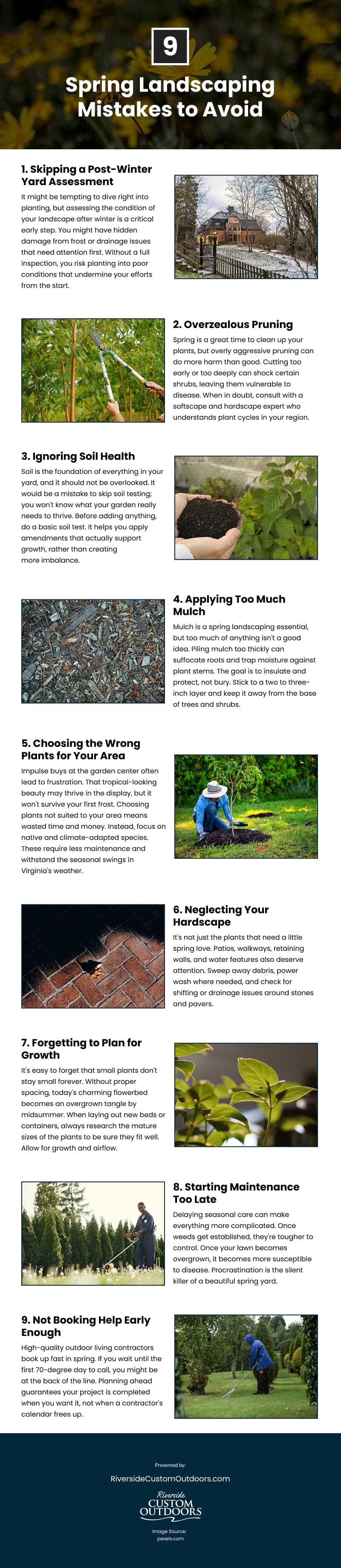

Spring is the prime time to bring your outdoor space back to life. You can almost hear your yard stretching its limbs after a long winter. However, before you jump headfirst into mulching and mowing, it’s essential to know the common mistakes homeowners make when transitioning into spring landscaping. Avoiding these errors will save you time and money, and make sure your garden doesn’t suffer.
1. Skipping a Post-Winter Yard Assessment
It might be tempting to dive right into planting, but assessing the condition of your landscape after winter is a critical early step.
You might have hidden damage from frost or drainage issues that need attention first. Without a full inspection, you risk planting into poor conditions that undermine your efforts from the start.
Take a walk through your property and look for standing water, cracked pavers, broken branches, and worn edging. Creating a comprehensive list of hardscape and softscape issues now helps you prioritize what your garden service needs to repair versus what they can enhance.
2. Overzealous Pruning
Spring is a great time to clean up your plants, but overly aggressive pruning can do more harm than good.
Cutting too early or too deeply can shock certain shrubs, leaving them vulnerable to disease. Each plant has its own pruning schedule. For example, you should wait until after flowering to prune spring-blooming shrubs like lilac or forsythia.
If you’re unsure, err on the side of caution and trim selectively. When in doubt, consult with a softscape and hardscape expert who understands plant cycles in your region.
3. Ignoring Soil Health
Soil is the foundation of everything in your yard, and it should not be overlooked. After winter, the soil can be compacted, drained of nutrients, and imbalanced in pH. It would be a mistake to skip soil testing; you won’t know what your garden really needs to thrive.
Before adding anything, do a basic soil test. It helps you apply amendments that actually support growth, rather than creating more imbalance. Healthy soil equals healthy plants.
4. Applying Too Much Mulch
Mulch is a spring landscaping essential, but too much of anything isn’t a good idea. Piling mulch too thickly can suffocate roots and trap moisture against plant stems. The goal is to insulate and protect, not bury.
Stick to a two to three-inch layer and keep it away from the base of trees and shrubs. That little breathing room goes a long way in preventing mold and rot.
5. Choosing the Wrong Plants for Your Area
Impulse buys at the garden center often lead to frustration. That tropical-looking beauty may thrive in the display, but it won’t survive your first frost. Choosing plants not suited to your area means wasted time and money.
Instead, focus on native and climate-adapted species. These require less maintenance and withstand the seasonal swings in Virginia’s weather. If you’re aiming for a luxury outdoor landscape, balance bold choices with practical, region-specific greenery.
6. Neglecting Your Hardscape
It’s not just the plants that need a little spring love. Patios, walkways, retaining walls, and water features also deserve attention.
Sweep away debris, power wash where needed, and check for shifting or drainage issues around stones and pavers.
7. Forgetting to Plan for Growth
It’s easy to forget that small plants don’t stay small forever. Without proper spacing, today’s charming flowerbed becomes an overgrown tangle by midsummer.
When laying out new beds or containers, always research the mature sizes of the plants to be sure they fit well. Allow for growth and airflow. You’ll thank yourself later when your landscape looks intentional rather than crowded.
8. Starting Maintenance Too Late
Delaying seasonal care can make everything more complicated. Once weeds get established, they’re tougher to control. Once your lawn becomes overgrown, it becomes more susceptible to disease. Procrastination is the silent killer of a beautiful spring yard.
To stay ahead, consider a comprehensive softscape maintenance package that starts in early spring. They prep your beds, prune strategically, fertilize correctly, and give your yard the best chance to thrive as the weather warms.
9. Not Booking Help Early Enough
High-quality outdoor living contractors book up fast in spring. If you wait until the first 70-degree day to call, you might be at the back of the line. Planning ahead guarantees your project is completed when you want it, not when a contractor’s calendar frees up.
Now is the time to schedule your spring landscape valet package and lock in your spot.
A Little Planning Goes a Long Way
Avoiding these common spring landscaping mistakes requires a bit of planning and observation. If you step into the season with care, your yard will reward you with blooms, lush greenery, and a polished look that you can enjoy all season long.
Video
Infographic
Spring is the ideal time to refresh your landscape, but jumping into yard work without a solid plan can lead to costly mistakes and disappointing results. Explore this infographic to learn the most common spring landscaping mistakes to avoid.