
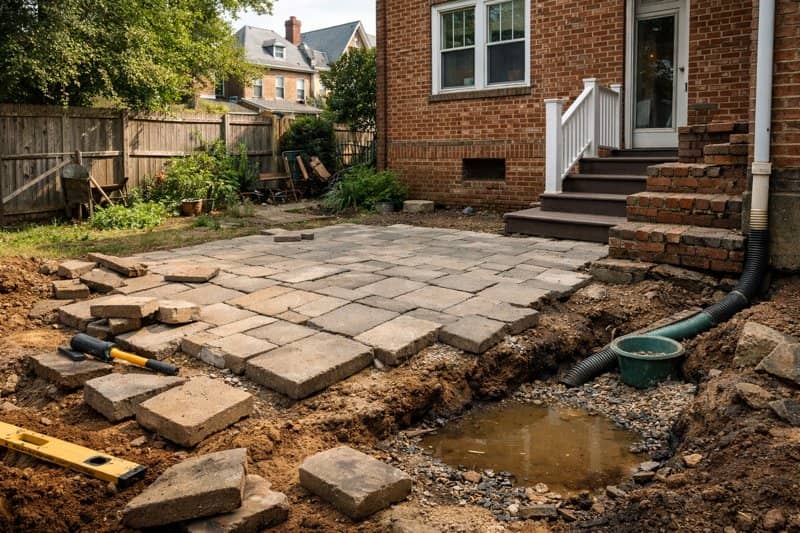
As a lover of DIY, you might consider a self-build project to update your patio. This project could feel like a cost-effective way to improve your outdoor space, and a constructive way to fill your weekends.
But if your home is older and located in a neighborhood like The Fan, Westover Hills, or anywhere near Midlothian Turnpike, think twice before going the DIY route.
These historic Richmond properties often sit on aging foundations surrounded by soil that shifts more than you’d expect. What starts as a backyard upgrade could quickly lead to drainage issues, cracking, erosion, or even structural damage.
When you own an older home, you should make every landscaping decision with care and a clear understanding of how your outdoor space interacts with the architecture and terrain. If in any doubt, your best course of action is to contact a local residential hardscape contractor here in Richmond, VA, for advice before you start digging.
Your Foundations Isn’t Forgiving
Many of Richmond’s older homes were built before modern drainage systems were standard. That means your foundation is likely more vulnerable to water intrusion and movement.
Adding a patio too close to the home, without accounting for slope and runoff, can channel rainwater straight toward your foundation. Even a slight misstep in grading, like building a flat surface on a subtly sloping yard, can send water where it doesn’t belong. Over time, that will weaken your foundation or cause it to shift.
The consequences might not show up immediately. But when cracks form along the interior walls or doors stop closing properly, the connection to your DIY patio will become clear.
In neighborhoods with brick-clad homes or crawl spaces, foundation stability is already a delicate issue. Add in the weight of a poorly installed patio, and you’ve introduced stress your home was never designed to handle.
Poor Soil Preparation Causes Settling and Cracking
Richmond’s clay-heavy soil is known for expanding and contracting with moisture. That’s a big challenge for any hardscape project, but even more so if you try to tackle it on your own without proper compaction tools or knowledge of the soil profile beneath your yard.
Skipping steps like soil excavation might save time up front. But without these steps, your patio can begin to settle unevenly within a season or two. You may notice pavers shift or form cracks, and within a short time, your once beautiful patio could be an eyesore.
If you’re building next to an older home with minor structural or slope shifts, an unprofessional installation will amplify those imperfections. The weight and movement of the patio can even affect nearby walkways, stairs, or decks over time, leaving you with an even bigger hardscaping problem to fix.
To avoid this scenario entirely and get the luxury patio your home deserves, the best option is to use a local patio builder who understands your soil conditions and can install a patio that will look excellent for years.
Drainage Design Is Non-Negotiable
Many DIY patio guides focus on layout and materials, but don’t give enough attention to water management. That’s a critical oversight, especially in older Richmond neighborhoods where storm runoff and yard drainage have long been inconsistent.
Water will find the path of least resistance. Without proper drainage planning, that path may be through your crawl space or basement. It’s not just a wet basement that’s at stake, either. Improper water flow can kill surrounding landscaping, erode garden beds, and contribute to mold or wood rot in older structures.
In neighborhoods like Woodland Heights or Church Hill, where homes often sit closely together, one home’s drainage issue can quickly affect neighboring properties. That can turn a DIY misstep into a broader problem for your community or HOA, and no one wants to deal with that.
Historic Charm Needs Compatible Materials
You don’t want your new patio to stick out like a sore thumb; you want it to feel like a bespoke addition to your home’s existing architecture. That’s why you need to incorporate your home’s aesthetics into your hardscape design.
Many older homes in Richmond have handmade brickwork, wrought-iron railings, and natural stone foundations that give them timeless charm. A DIY patio with modern, mismatched pavers or oversized concrete pads can look awkward against that stunning backdrop.
You might also run into issues with city guidelines or historic preservation rules, depending on where you live. In districts like The Fan or parts of Church Hill, exterior changes are sometimes reviewed for compatibility with the district’s character.
If you choose materials or layouts that clash with the neighborhood’s historic fabric, it could lower your curb appeal. A local expert hardscaping contractor will know all the relevant guidelines and restrictions for your neighborhood and can help you choose the perfect material for your new patio.
When to Rethink the DIY Approach
There are certainly outdoor projects that lend themselves well to DIY projects, but when it comes to a permanent feature like a patio that interacts with your home’s foundation and affects its long-term value, working with professionals is often the smarter route.
This is especially true if your home was built before 1950, or if your yard has a noticeable slope or collects water during storms.
Don’t risk permanently damaging your home when a professional hardscape team can evaluate your location and select materials that match your home’s era and style. They’ll also ensure the patio is built to last, not just visually, but structurally as well.
Build Your Patio on a Solid Foundation
In Richmond, where historic charm meets chic modern living, your home deserves thoughtful outdoor improvements that honor its legacy.
A patio can absolutely enhance your lifestyle and property value, but only when you build on a solid foundation, both literally and figuratively.
When you cut corners on grading, drainage, or materials, it is a misstep that will come back to haunt you. You might save money in the short term, but using a professional means you get it right from the beginning and can enjoy your patio with no regrets.