A beautifully designed yard offers peace and relaxation, but what if it could also provide you with food? Adding a vegetable garden to your backyard changes the way you see your outside space. You’re transforming your property into a space that’s both functional and beautiful, where sustainability and design work in harmony.
Edible elements incorporated into your yard design enhance your home’s character and provide practical benefits. Tuck a set of raised beds beside your patio, or integrate a full garden into your softscape. Either way, a vegetable garden connects you to your environment in rewarding ways traditional landscaping cannot. Here are our top reasons why you should start planning your edible landscape today.
1. It Enhances Your Outdoor Living Experience
There’s something special about harvesting vegetables you’ve grown. It’s a hands-on, sensory experience that deepens your outdoor lifestyle. The earthy aroma of tomato vines and the satisfaction of gathering dinner ingredients from your backyard all enrich your connection to nature.
A vegetable garden adds energy to your property, inviting change throughout the year. In contrast to ornamental plants, it evolves with each passing season, creating a living rhythm. Spring’s vibrant seedlings emerge first; by summer, lush growth fills your beds. Finally, fall harvests complete a natural cycle that keeps your yard engaging and vibrant.
If you already enjoy entertaining or relaxing outdoors, a vegetable garden design and installation extends that enjoyment in an interactive way. It will spark interest with your friends and become a conversation starter. You can engage your children and use it as a teaching tool to help them grow their own food.
2. It Adds Beauty and Character to Your Landscape Design
Vegetable gardens can be as visually striking as any feature in your yard. By combining functionality with aesthetics, you create a garden that enhances and unifies the space.
Raised garden beds framed in natural wood or stone, defined pathways, and neatly organized planting zones bring structure and polish to your outdoor space. Interplanting vegetables with herbs, flowers, or shrubs introduces texture and color while attracting pollinators.
For example, you could use leafy greens as groundcover and climbing beans or trellised tomatoes for vertical interest, even in container gardens. Treat your vegetable garden as a central part of your outdoor design.
With thoughtful design, your vegetable garden becomes the eye-catching centerpiece of your landscape, evolving beautifully each season. You could start planning your own food-producing softscape design and installation today and transform your outdoor space into a beautiful, productive haven.
3. It Supports Sustainability and Environmental Health
Few landscaping choices are as environmentally friendly as growing your own food. By cultivating a vegetable garden, you reduce your reliance on store-bought produce. This reduces packaging waste and transportation emissions. You also gain complete control over how your food is grown, opting for no pesticides and no synthetic fertilizers, instead using natural soil and care.
Integrating your garden into a broader sustainable landscape plan can yield even greater benefits. Composting kitchen scraps to feed your soil, utilizing rainwater collection systems for irrigation, and planting native companion species all contribute to creating a closed-loop ecosystem. These actions nurture both your plants and the environment.
Your garden can support pollinators by adding marigolds, lavender, or sunflowers, which attract bees and butterflies. Each action strengthens biodiversity, making your yard part of a wider ecological network.
4. It Boosts Property Value and Curb Appeal
A custom outdoor kitchen and edible garden installation are a smart investment. Homeowners now value outdoor spaces blending beauty and sustainability. Seamlessly integrated gardens show thoughtful design and luxury.
For potential buyers, a professionally designed garden signals a commitment to wellness and self-sufficiency. It reflects care, creativity, and a forward-thinking approach to home design. Even small edible installations, such as vertical herb gardens or ornamental vegetable beds, enhance perceived value by making your home stand out from the crowd.
When paired with high-quality hardscape features, such as stone borders or patios, your vegetable garden becomes an elegant, enduring feature that enhances your entire property.
5. It Promotes Health and Well-Being
Gardening can be a simple and effective way to boost both physical and mental well-being. Spending time outdoors relieves stress, increases mindfulness, and provides gentle exercise. Growing your own food supports healthier eating by providing fresh, locally grown produce.
Beyond nutritional gains, nurturing your garden ignites a sense of achievement and purpose. Witnessing your plants sprout, thrive, and yield tangible results connects you with nature’s cycles, something modern life often neglects.
If you crave an activity that revitalizes body and mind, gardening delivers unmatched rewards. It infuses joy into your daily routine while anchoring you in your surroundings.
6. It Encourages Connection and Community
A garden brings people together. Whether sharing surplus vegetables with neighbors, involving your kids in planting, or hosting outdoor gatherings, your garden becomes a space for connection and community.
It helps teach younger generations about sustainability, food systems, and the value of hard work. Your example can inspire neighbors to create edible landscapes, spreading positive environmental and social impact.
This shared connection is what makes a landscape truly vibrant. Your outdoor space transforms into an experience that builds community and gratitude.
How to Get Started
The best vegetable gardens begin with good planning. You’ll want to consider factors such as sunlight exposure, soil type, drainage, and proximity to water sources. For a seamless design that complements your home, it’s wise to work with a landscape professional who can help integrate your garden into your property’s overall layout.
A professional designer can help you choose the best layout, plan for growth, and blend beauty with function. With a clear vision and expert guidance, your garden can be both productive and visually stunning.
Adding a vegetable garden creates a unique connection with your environment tailored to your vision. With a local landscape designer, you can come up with gardens that blend productivity and personalized beauty, ensuring every harvest is a testament to thoughtful planning and distinct style.
Video
Infographic
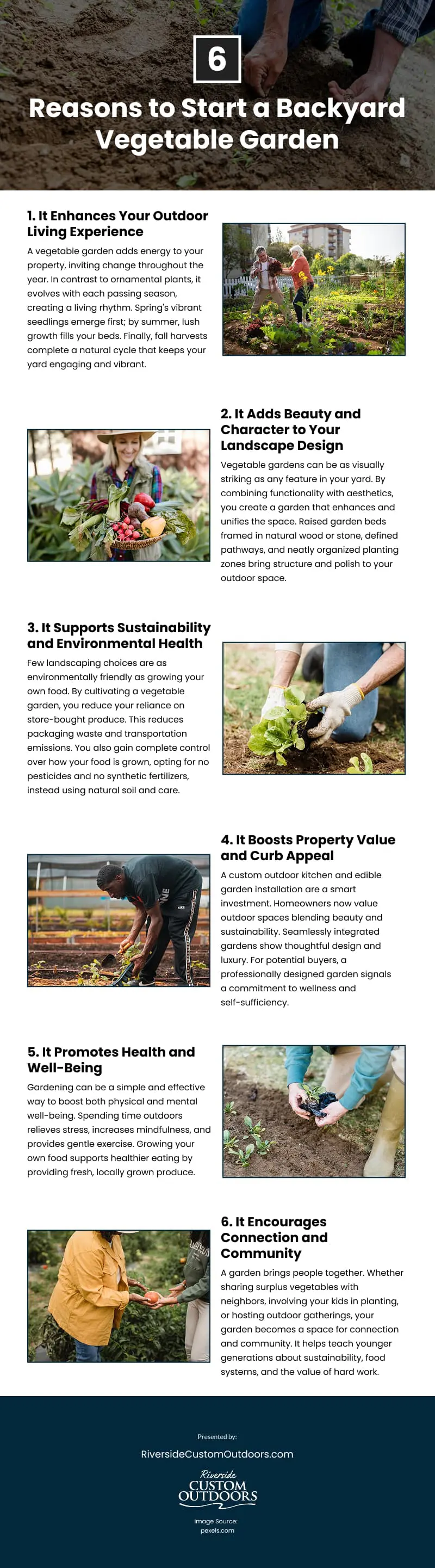
A well-designed vegetable garden transforms your backyard into more than a relaxing space—it becomes a vibrant, productive landscape that seamlessly blends beauty, purpose, and sustainability. Explore this infographic to discover the top reasons to start your own backyard vegetable garden.