
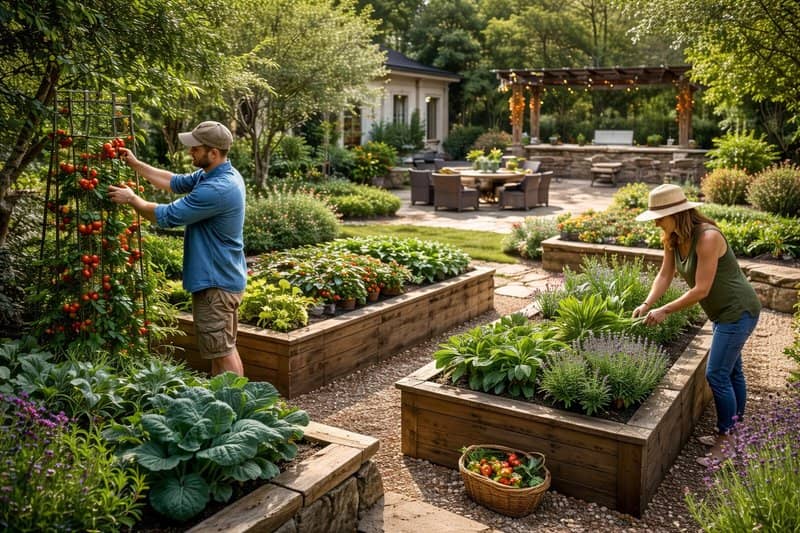
Edible gardens are no longer reserved for rustic backyards or hobby homesteads. You’re now seeing them pop up in luxury neighborhoods, master-planned communities, and even modern estates, designed with just as much attention to aesthetics as function. This shift reflects a broader trend in landscape architecture where beauty, sustainability, and purpose collide.
If you’re considering elevating your outdoor space, an edible garden might be the feature that ties it all together. With the right food-producing softscape design and installation, your yard can become a place that provides for you and your family.
Wellness Meets Landscape Design
You care about what goes on your plate, and that extends to what goes into your edible landscape, from growing tomatoes in containers or strawberries in hanging baskets.
Edible gardens are now tailored eco-systems of raised beds, integrated herb borders, fruit-bearing shrubs, and climbing vines, all woven into your yard’s softscape to complement your outside space.
The benefits of edible gardens for wellness are substantial. Growing your own herbs, fruits, and vegetables lets you control what you eat, reduce chemical exposure, and stay more active outdoors. You also receive the mental boost of nurturing something living, something that gives back with every harvest, and the pride of using your own produce in your kitchen.
Whether you’re sipping mint tea from your own leaves or grabbing rosemary for the chicken right before dinner, your edible landscape provides for you every day.
Functional Beauty Is the New Luxury
Intentionality is at the heart of high-end landscaping. Your outdoor space should not only look incredible, but it should also serve a purpose. Edible gardens represent this evolution perfectly.
Picture sleek, geometric raised beds that mirror your patio design. Imagine a border of ornamental kale blending seamlessly into boxwood hedges, or fruit trees that also serve as focal points in the garden. When properly planned, edible elements enhance your curb appeal and create conversation-worthy areas within your landscape.
Your experienced softscape designer can customize these gardens to reflect your style, whether you lean towards a modern minimalist or classic English countryside aesthetic. Design-forward features, such as irrigation systems and custom trellises, allow you to grow a bounty without sacrificing elegance.
Sustainability Starts at Home
Adding a food-producing softscape to your landscape also reduces your environmental footprint. You’re reducing your reliance on long-distance produce shipping and minimizing the number of trips to the grocery store.
Plus, these gardens promote biodiversity. Bees, butterflies, and other beneficial insects thrive in spaces that include pollinator-friendly edibles such as basil, lavender, and strawberries. If you include composting stations or integrate water-wise irrigation systems, you further enhance the regenerative cycle of your yard.
When you adopt a lifestyle rooted in sustainability, your landscape becomes a reflection of your values. It subtly conveys that you’re investing in something enduring and meaningful, not just something to admire.
What to Grow and How to Make It Work
The key to a thriving edible garden in a luxury landscape is planning.
There are three main categories to consider. Firstly, herbs. Rosemary, thyme, sage, and mint are both fragrant and visually appealing. They make great border plants and fill in spaces between pathways or stones.
Secondly, a vegetable patch. Consider leafy greens like Swiss chard and lettuce, or statement-making options like purple cabbage. Using raised beds for your veggies allows you to rotate crops without disturbing your design.
Finally, fruits. Fruit trees, shrubs, or even trained grapevines bring both structure and seasonal interest to the space.
With a professional softscape service, you can ensure proper spacing and seasonal transitions that keep your garden looking lush year-round.
Why Professional Help Makes a Difference
Edible gardens require more than enthusiasm. Without proper planning, they can easily become overgrown and unappealing. That’s why you should always partner with hardscape and softscape outdoor living experts who understand how to balance beauty with function.
A professional landscape designer brings several advantages to your project. They know what grows best in your microclimate, and can tailor your design to support this. A professional will also plan your space strategically, ensuring the plot maximizes sunlight and growth potential while incorporating a beautiful design.
Using a team that works with both hardscape and softscape installation means they seamlessly integrate them in your outside area. Your design will complement existing hardscaping, such as patios and walkways, rather than competing with it.
Whether you’re starting from scratch, looking to retrofit part of your backyard, or after some ongoing maintenance, working with experts ensures your edible garden adds long-term value and style.
A Growing Trend in High-End Outdoor Living
As homeowners like you become increasingly invested in lifestyle-based design, edible gardens continue to gain popularity. They offer a unique mix of elegance and eco-consciousness that aligns with today’s definition of luxury.
In upscale communities across the country, you’ll find showstopper gardens that produce fresh figs beside fire features or thyme borders that frame custom paver patios. These landscapes create space for nourishment and calm.
If you’ve been thinking about adding an edible garden to your yard, now’s the time to explore how your landscape designer can create something perfectly matched to your taste.