
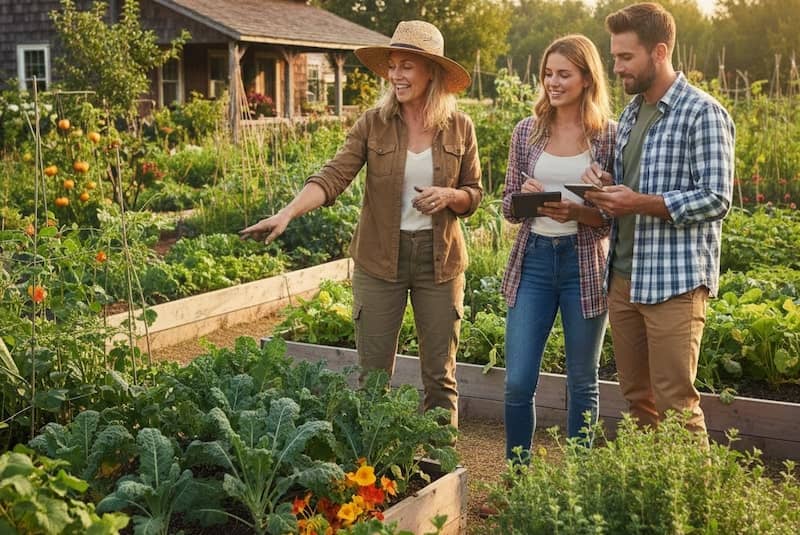
Do you dream of stepping out into your backyard and harvesting your own homegrown produce? To cut your own fresh herbs to create the perfect garnish? Or to pick your own berries to add to your morning smoothie? You may want your own vegetable plot feet away so you know precisely where the veggies on your plate have come from.
This fantasy could become a reality with a custom outdoor kitchen and edible garden design as your next landscaping project, where creative design partners with sustainability, and your yard is tasteful in more ways than one.
Beauty and bounty sharing the same soil might sound simple in theory, but making the design work takes thoughtful planning. Connecting with a local expert can make all the difference in transforming your yard into a stunning space that nourishes your family.
What Is Edible Landscaping?
Food-producing softscape design and installation is the art of combining ornamental and edible plants into your complete landscape design. The outdated idea of having separate patches for vegetables and your main yard no longer applies to modern living.
Instead of separating the two, an integrated edible garden will feature fruits, vegetables, and herbs alongside decorative flora and hardscaping. The result? You have a vibrant ecosystem that sustains your family and showcases the beauty of your home.
An experienced softscape designer knows that sometimes, simple swaps can have a huge impact in creating an edible garden. Instead of traditional hedging around the edge of your property, they can suggest borders of blueberry bushes. Rather than using grasses or flowers as ground cover, you could also use herbs like rosemary or thyme.
Knowing what plants can serve the dual purpose of being useful and tasty will help your backyard become a harmonious place that is both beautiful and sustainable.
Why You Should Start Your Edible Landscaping Journey Now
There are many more benefits to starting an edible landscape than taste. With grocery prices rising, especially for organic options, growing your own food at home can reduce your food bill and make it easier to make healthy choices.
Instead of having to pay a premium, you can grow pesticide-free fruits and vegetables straight from your backyard. Although there is some effort to initiate a food-producing softscape design, once installation is complete, it can be very low-maintenance to manage. Planting perennial plants, such as fruit trees and berry bushes, once established, will require minimal ongoing care.
You will also see reduced irrigation costs as edible landscaping is often more eco-friendly than ornamental gardens. Native edible plants use less water than their foreign cousins and attract local pollinators, so you will spend less on water and see the benefit of local insect visitors.
The best part? You don’t need acres of space to start. Even small properties can incorporate edible elements through creative design, like container gardens, vertical planters, or raised beds.
The Role of Local Experts in Successful Edible Landscaping
Working with an expert local softscape and hardscape company ensures your edible landscape thrives in your specific climate and soil conditions.
Virginia, for instance, has a diverse growing environment that allows for a rich mix of edible plants, but also presents challenges like heavy clay soil and unpredictable rainfall.
A local designer understands how to navigate these factors. They’ll help you identify plants that grow well in your region and suit your property’s sunlight and drainage.
They can also design layouts that balance beauty with function, ensuring each plant serves an ecological and visual purpose. However, it’s not just the soft elements of your garden that a local expert can plan; they also integrate hardscape elements, such as paths or raised beds, to complement your plan and make harvesting your crops easier.
This tailored approach helps you avoid common mistakes and create a sustainable space that evolves beautifully season after season.
Blend Aesthetics with Function
The secret to a successful edible landscape lies in achieving a balanced design. You want the practicality of a garden without sacrificing the artistry of your landscape. Local professionals help accomplish this by merging design principles with ecological awareness.
For example, fruit trees can anchor a yard much like ornamental trees, providing shade and structure. Herbs like thyme or oregano can act as lush ground covers that deter pests and fill the air with fragrance. Edible flowers, such as nasturtiums and calendula, add bursts of color while also being usable in salads and as garnishes.
When combined thoughtfully, these plants create a complete sensory experience, with sight, smell, and taste all coming alive every time you step outside. And because each plant serves multiple purposes, your yard becomes both more efficient and more engaging.
Design Elements to Consider
A well-planned edible landscape will transform your backyard into a functional ecosystem. When planning your design, also consider practical elements.
Most edible plants require at least six hours of direct sunlight, so plan your layout to maximize light exposure and ensure adequate drainage.
You can mimic nature in your setup by incorporating multiple layers into your softscape design. Use tall fruit trees, mid-level fruit bushes, low herbs, and ground cover to create visual depth and maintain healthy soil.
These considerations ensure your garden not only produces food but looks vibrant throughout the year.
Begin Your Edible Landscaping Journey
If you’re ready to turn your yard into a sustainable and edible paradise, start by consulting a local expert who understands your region and your goals. Schedule your design consultation. Together, you’ll craft an outdoor space that blends the art of landscaping with the joy of homegrown living, where every corner of your garden offers both beauty and bounty.