
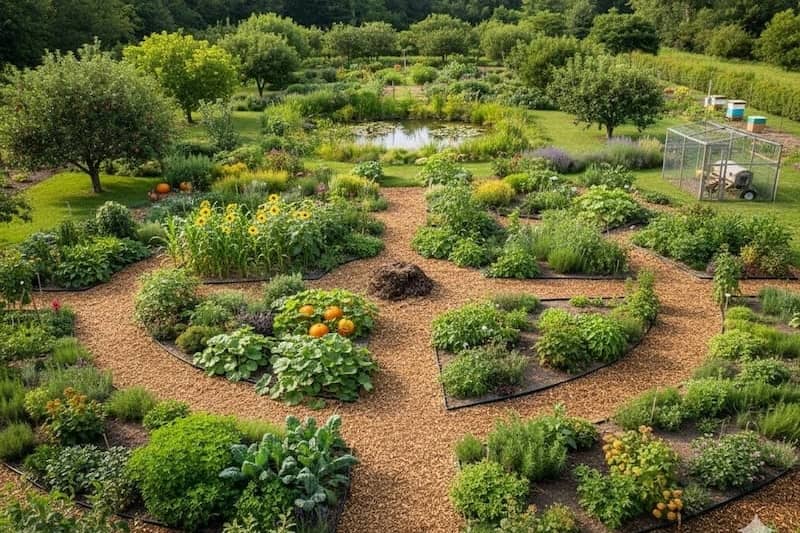
Retrofitting your landscape using permaculture doesn’t require starting from scratch or overhauling your yard. Instead, it’s about working with what you already have and designing to mimic natural ecosystems.
Whether you live in a suburban neighborhood, a rural plot, or an urban lot, you can apply sustainable permaculture outdoor solutions to reduce waste, conserve water, increase biodiversity, and create a landscape that thrives year-round with less effort.
You’ll create a resilient and regenerative landscape by shifting from a decorative mindset to one rooted in function and ecology. Let’s explore how to retrofit your existing outdoor space with permaculture in mind while keeping sustainability at the forefront.
1. Start with Observation and Mapping
You can’t design an effective permaculture retrofit without first understanding your property’s flow. Take time to observe how sunlight moves across your yard during the day. Where does water naturally pool after a storm? Which areas are dry or shaded? Where does the wind funnel through?
Use professional softscape services to sketch out your lot and mark existing features like trees, garden beds, structures, and slopes. This map becomes the foundation for designing zones and choosing appropriate plants or systems later. Observation is the core of permaculture; it helps you make decisions that work with nature, not against it.
2. Harvest Rainwater Instead of Letting It Run Off
A key principle of permaculture is capturing and storing resources, especially water. Instead of letting rainwater flow down your driveway or into a storm drain, redirect it to nourish your landscape.
To slow and absorb runoff, you might install a rain barrel system at your downspouts or build a swale, which is a shallow ditch along the contour of your yard. For a more integrated approach, design rain gardens with native plants at the base of slopes or near hardscape edges. This prevents erosion and reduces your reliance on municipal water supplies for irrigation.
This passive water harvesting is eco-friendly and practical in Virginia and other regions with mixed rainfall patterns.
3. Build Healthy Soil With Sheet Mulching and Compost
You don’t need to rip your lawn or dig deep to improve soil health. Start by layering organic materials directly onto existing grass or depleted beds using sheet mulching. This involves laying down cardboard or newspaper, followed by alternating layers of compost, grass clippings, straw, and leaves. Over time, this breaks down into rich, living soil without tilling.
You could also have an experienced softscape designer build small compost systems near your garden zones to turn kitchen scraps and garden waste into a nutrient-rich amendment. Worm bins are an especially compact option for urban or small-space gardeners. By investing in soil health now, your landscape will require less fertilizer, less water, and less ongoing maintenance.
4. Plant in Zones for Efficiency and Yield
In permaculture, your landscape is divided into zones based on how often you use or access different areas.
Zone 1 is closest to your house and ideal for herbs, salad greens, and things you harvest daily. Zone 2 might include perennial vegetables, fruit bushes, or a chicken coop if you keep them. Zones 3 through 5 stretch outward with larger trees, passive systems, or wilder, less-maintained areas.
Even in a small yard, you can apply zoning by placing your most frequently used plants near your kitchen door and low-maintenance elements further away. Zoning reduces the energy you spend moving through your garden and encourages natural efficiency.
5. Swap Traditional Lawn for Edible or Low-Water Alternatives
Traditional turfgrass is a high-maintenance, low-reward feature in many landscapes. Permaculture encourages you to rethink this space. Instead of mowing weekly and pouring on water and chemicals, consider replacing sections of your lawn with:
- Native groundcovers that require minimal upkeep
- Edible landscapes like clover mixed with herbs
- Meadow-style plantings that support pollinators
In Virginia, clover, creeping thyme, and native grasses like little bluestem or Virginia wild rye are excellent choices.
If you want to go further, consider creating a front yard food forest by layering fruit trees, berry shrubs, and a perennial vegetable garden designed and installed in a natural, productive system.
6. Design Polycultures Instead of Monocultures
Most conventional gardens are organized in rows of a single type of plant, a monoculture that is prone to pests and diseases. Permaculture embraces polyculture, where plants are mixed together to support and protect one another.
For example, you might plant tomatoes alongside basil and marigolds, which naturally deter pests. Or grow squash at the base of corn stalks with beans winding up the stems, following the famous “Three Sisters” method used by Indigenous peoples. These combinations reduce your need for chemical sprays and help build a more resilient system.
Even flower beds can benefit. Interplant native wildflowers with vegetables, herbs, or shrubs to attract beneficial insects and promote biodiversity.
7. Add Vertical Elements to Maximize Space
Retrofitting a small or already-developed landscape requires creative use of space. That’s where vertical design comes in. Consider installing trellises for vining crops like peas, cucumbers, or beans. Espalier fruit trees along fences or walls to produce food without taking up much room. Use wall planters or stackable garden towers for herbs and leafy greens.
Vertical structures can also offer shade, privacy, or wind protection when strategically placed, helping you manage microclimates in your yard more effectively.
8. Incorporate Wildlife Habitats into Your Layout
Sustainability doesn’t stop with your own needs. A permaculture landscape supports birds, bees, butterflies, and beneficial insects. This creates a healthier ecosystem overall and naturally reduces pest pressures.
You can install birdhouses, bee hotels, or bat boxes in appropriate locations. Plant milkweed to support monarchs or sunflowers to attract finches. Keep some fallen logs or stone piles for shelter, and add a small water feature, like a birdbath or bubbling fountain, to offer a drink and bathing space for local wildlife.
9. Use Renewable, Natural, and Reclaimed Materials
Hardscape elements like paths, patios, and retaining walls can still be part of a permaculture design if they’re sustainable. Use permeable pavers to reduce runoff and allow groundwater recharge. Choose locally sourced stone, FSC-certified wood, or reclaimed brick and lumber for building materials.
When built from recycled pallets or repurposed fencing, your raised beds and trellises can reflect permaculture values. These materials not only reduce your environmental footprint but also add character and story to your landscape.
10. Design for the Long Term, Not Just the Season
Permaculture encourages you to think in decades, not just planting seasons. Choose trees and shrubs that will mature into productive assets. Lay out garden beds and irrigation systems that require less work each year. Allow your soil to improve, your mulch to compost in place, and your plant guilds to grow stronger over time.
Instead of constantly battling weeds, pests, and weather, you’ll build a system that works with natural rhythms and be rewarded with a landscape that gets better year after year.
Video
Infographic
Retrofitting your landscape with permaculture principles doesn’t mean starting from scratch—it’s about working with what you have and designing in harmony with nature. This infographic reveals practical ways to transform your existing space using permaculture strategies.
