
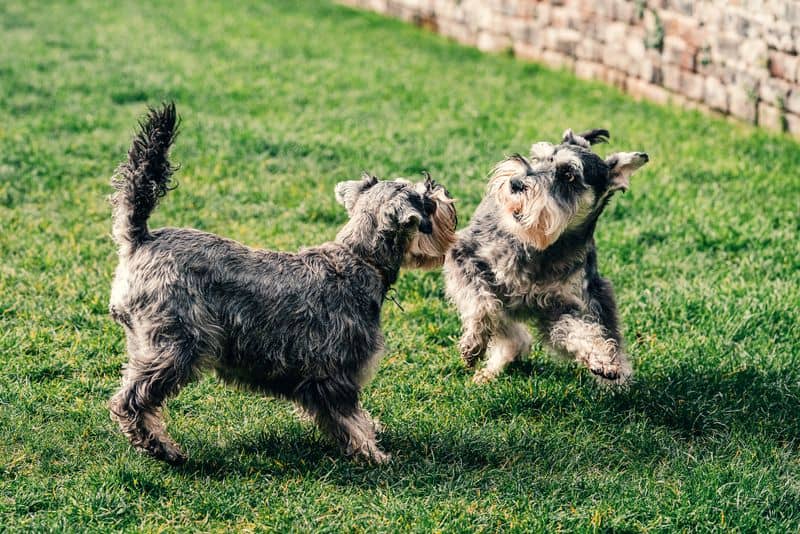
Dogs don’t really care about how your lawn looks. They often take the same route to the fence every morning, dig in the same shaded corners, and head back to those same favorite spots after it rains, whether that works for you or not.
If you don’t design your lawn with that kind of repetitive behavior in mind, it won’t hold up for very long, no matter how good your grass seed is.
Building a lawn that can handle active pets starts well before anything gets planted. Soil structure, drainage, traffic patterns, and turf selection all play a role in how well it performs under constant use, and you and your experienced softscape designer need to plan for each one from the beginning.
Start With the Soil, Not the Seed
One of the most common mistakes in designing lawns for pet households is jumping straight to turf selection without first addressing what’s underneath. Grass planted in poorly prepared soil won’t bounce back from heavy use, no matter how durable the variety is.
In central Virginia, soil is mostly clay-heavy, which means it compacts easily under repeated foot traffic and constant pet activity. When soil particles are pressed so tightly together that air and water can’t move through them properly, high-use lawn areas thin out and struggle to recover. Roots can’t grow deeply, water doesn’t soak in the way it should, and the turf loses the structure it needs to repair itself after damage. Add repeated pet activity to this, and you’ll end up with a waterlogged mud bog, and your dog’s paws will quickly churn that mud into deep trenches.
Preventing compaction issues starts before you install anything. That means testing the soil to understand what you’re working with, improving it with organic matter where needed, and building a base that actually drains instead of holding water. Dogs that sprint, stop, and turn sharply put a lot of force into the ground, and bare clay doesn’t handle that well. A properly prepared soil base absorbs that impact and gives the turf above it a real chance to recover.
Drainage has to be part of the same plan. Any low spots that collect water will become exciting areas for your dog to roll or dig, and those muddy spots can become bare in no time. Grading your lawn to move water away from high-traffic areas and, when needed, adding subsurface drainage helps keep the lawn usable through wet weather rather than turning it into soft ground every time it rains.
Map Out How Your Dog Actually Uses the Yard
Most dogs establish predictable traffic patterns within a few weeks. If you watch, you can see where they run along fence lines, loop around fixed objects, and return to the same resting spots day after day. Paying attention to those patterns before you begin any planting or hardscape work can changes how well the space holds up.
Areas that naturally see heavier use need a design that accounts for the reality of that concentrated traffic. Fence lines, gate entrances, shaded corners under trees, and the worn path from the back door into the yard will all benefit from tougher grass varieties, better subgrade preparation, or even hardscape transitions where turf won’t realistically last.
Pet urine is another consistent cause of lawn damage in dog households, often creating small dead patches that spread in dry weather. These spots usually show up in the same places once a dog develops habits. Planning for those areas early through better drainage and easy irrigation, or replacing high-impact areas with turf-free hardscape, helps limit damage before it becomes an ongoing pattern. It’s always easier to design around stress points upfront than to keep trying to fix them after they show up.
Choose Turf Built for Virginia’s Climate
Not every turf variety holds up the same under heavy use, and they also don’t perform equally well in central Virginia’s climate. Choosing the wrong grass for your region, your soil conditions, or how your household actually uses the yard often leads to a cycle of extra maintenance and repeated reseeding, which will continue to cost you every time.
In Virginia, lawns generally fall into two categories: cool-season and warm-season grasses. Cool-season varieties like tall fescue and Kentucky bluegrass do best in the cooler months of fall and spring, and they tend to hold their color through milder winters. Tall fescue, in particular, is one of the more durable cool-season options, and with proper soil preparation, it establishes well in clay-heavy soils. It also handles shade better than most alternatives, which is important in yards with mature trees or north-facing areas.
Warm-season grasses such as Bermuda and zoysia are better suited for full-sun yards during Virginia’s hot summers. Bermuda stands out for its durability and quick recovery from wear, which makes it one of the more pet-friendly options. The tradeoff is that it goes dormant in winter and doesn’t perform well in shaded areas.
Ultimately, the right choice depends on your specific yard conditions. How much sun does the yard get? What is your soil like? How much of the year do you want active growth? A softscape professional familiar with central Virginia can match the turf to your property rather than just defaulting to whatever sod is easiest to source at that moment.
Reinforce the Areas That Get the Most Use
Some parts of a yard just aren’t going to support turf long-term when dogs are using them heavily. Designing with that fact in mind usually yields much better results than constantly trying to fix the same worn spots.
Instead of fighting those areas, incorporate hardscape transitions in the spots that see the most traffic, like fence lines, gate entries, and the path from the back door.
Materials like gravel, decomposed granite, flagstone, and pavers can withstand daily use without breaking down, eliminating the ongoing cycle of reseeding that never really recovers. These transitions also help with drainage in high-use zones, reducing the mud tracked across the lawn and into your home.
It also helps reinforce areas around fixed features like trees, raised beds, and planters with mulch or other ground cover that match the level of use. Dogs tend to circle and repeat paths around objects, which can lead to exposed roots and compacted soil over time. The idea is simple: design those zones for heavy traffic before wear patterns form on their own. Once a path develops naturally, it takes far more effort to correct than it would have taken to plan for it from the start.
A Healthy Lawn and a Happy Dog Aren’t at Odds
Building a lawn that can handle active pets starts with design choices made before anything gets planted. Those same choices continue to matter after the lawn is in place.
Once the yard is established, maintenance practices need to follow the same logic. Fertilizers, weed control products, and pest treatments that don’t account for how dogs use the space can create ongoing stress points that work against the structure built during planning and installation.
That’s where working with pet safe lawn treatment companies can fit into the overall approach. In many cases, they continue the same priorities established during design by using applications that account for how pets move through and interact with the yard as part of a routine maintenance plan.
A lawn that holds up to daily use usually reflects consistency across every stage of the process. Soil preparation, traffic-aware layout, turf selection, and reinforcement of high-use areas all work together as a system. When those elements are aligned from the beginning and maintained in a way that respects how the yard is used, the space can stay functional even with active dogs.