
Older brick homes in Henrico have a lot going for them. They’re solidly built, show plenty of character, and have a presence that newer homes rarely match.
But when you’re ready to add a patio or update an existing hardscape element, that same character can make things a bit more complicated. Matching it well extends beyond just choosing a paver that looks nice.
The choices you make before any stone is laid determine whether the finished space feels like it belongs to the home or looks like an add-on that never really fits in. It can feel overwhelming to make sure you get everything right, but local residential hardscape contractors can help make your addition a smooth process from start to finish.
Read the Brick Before Choosing Anything Else
Brick is not a single color, and the ones used in older Henrico homes were often handmade or locally produced. That means you often see more variation in undertones and weathering than you’d get with modern mass-produced materials. Those variations are part of your home’s charm, and your patio design needs to work with it, not against it.
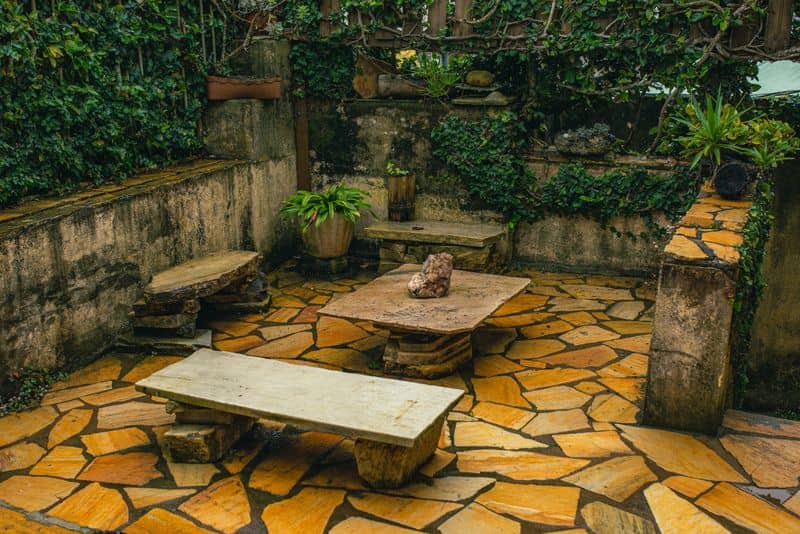
Start by looking at the brick under different lighting conditions. Morning and afternoon sun can make the same wall look like it’s two different colors. Pay attention to the undertones that show through. Brick with warm amber tones often clashes with cool gray bluestone. It tends to sit much better alongside tumbled sandstone or aged limestone.
Texture plays a big role, too. Smooth, machine-made pavers next to old hand-laid brick can feel incongruent rather than complementary. Pavers with a more textured or hand-cut finish help bridge that gap.
Your goal isn’t to match the brick exactly. It’s to choose materials that feel like they belong in the same visual space, even if they arrived decades apart.
Scale and Proportion Matter as Much as Color
A patio can be a perfect color match and still feel disconnected from your home if the scale isn’t right. The size and proportions of the new hardscape elements need to work with the architectural scale of your home.
Large-format pavers can feel oversized against a cottage-style brick facade. Smaller modular units often echo the rhythm of the existing brickwork without imitating it. On the flip side, a patio that’s too small for the home can make the space feel unfinished, like it’s still waiting for completion.
Pay close attention to the transition points. The spots where the patio meets the house, like steps, doorways, and thresholds, are where people naturally look and move most. A well-proportioned step detail, with the right riser height and tread depth, often does more to tie everything together than a perfect material match ever could. These details register quickly and intuitively, either strengthening or quietly undermining the design.
Prepare for What’s Under Your Yard
Central Virginia clay soil is one of the most common reasons patios fail in this region. Clay expands when wet and shrinks when dry, which puts constant pressure on anything built on it. In older Henrico properties, this clay is almost always part of the ground conditions.
Proper base preparation isn’t something to cut corners on, and it may be worth bringing in a local patio builder for expert advice. The foundation decides whether your patio stays level for years or starts shifting and heaving within a couple of seasons. In clay-heavy soils, a solid build usually means digging deeper than standard, using compacted angular gravel that drains well, and accounting for the moisture issues that come with dense soil.
Drainage planning ties directly into all of this. When water gets trapped under a patio in clay soil, it has nowhere to go, which speeds up freeze-thaw damage during Virginia winters. The slope and drainage need to be built into your patio design from day one, not added after problems arise. By then, it’s almost always more expensive than doing it right the first time.
Pick Materials That Age Alongside Your Home
Patios usually fail visually for the same reason they fail structurally: compromises made in the selection stage. The materials you choose now will sit next to brick that’s already 50 or 70 years old, so they need to age well alongside it.
Natural stone works especially well here. Bluestone, flagstone, and limestone all develop a natural patina over time that you don’t get with synthetic or highly finished pavers. That aging process actually works in your favor next to older brick. Ideally, you want a patio that looks even better at year ten than it did on day one.
When natural stone isn’t the right fit for the project or the budget, tumbled or hand-finished pavers in warmer tones can get you part of the way there. The main thing to avoid is anything that looks too uniform or factory-made, because it will still look that way years down the line while the brick around it continues to change. Aged finishes help give the patio the staying power it needs to sit comfortably alongside a historic facade.
Get Grading and Drainage Right From the Start
Many Henrico homeowners who built decades ago didn’t design their homes with today’s patio additions in mind. The existing grading around the house often doesn’t naturally support a new hardscape without some adjustments.
The key rule is simple: water should move away from the foundation, not toward it. If a patio slopes back toward the house, it can make moisture issues worse in a structure that may already have years of settling behind it. Getting the slope right protects both the patio and the home it’s attached to.
In some Henrico yards, that means regrading the surrounding soil or addressing low spots where water tends to pool after heavy rain. None of this is especially complex, but it does need to be addressed before installation starts, not after problems surface during the first wet season. A proper site evaluation catches these issues early and helps avoid costly fixes after the patio is in place.
A Patio That Looks Like It Was Always There
A well-designed patio doesn’t call attention to itself; it just feels like it has always belonged there. For older brick homes in Henrico, getting to that point comes down to choosing materials that work with the existing architecture, preparing the structure for Virginia’s clay-rich soil, and grading to protect both the new patio and the home it connects to.
Working with residential hardscape contractors in Henrico who understand both the design side and the technical demands of these projects is what separates a patio that truly fits from one that always feels slightly off. We’d be happy to take a look at your property and talk through what makes the most sense for your home.