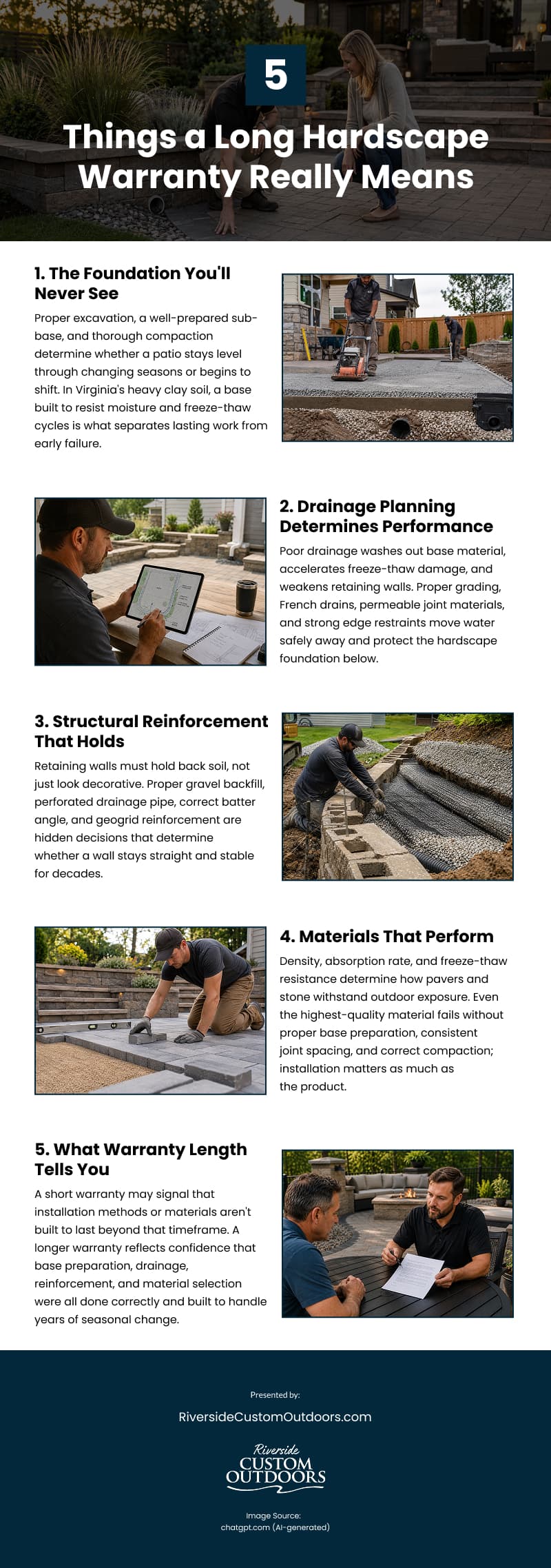
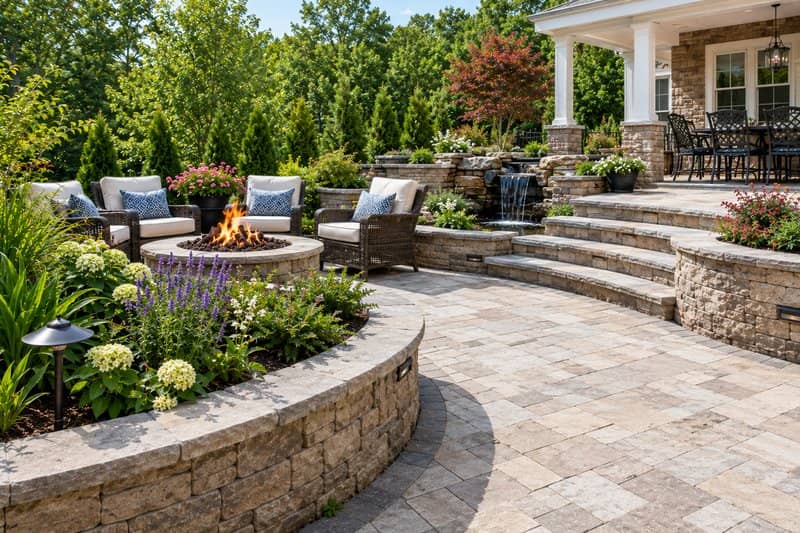
It’s easy to think of a hardscape warranty as just another item on a contract. You check that coverage is included, note how long it lasts, and move on. But the length of a warranty often says something important about the work behind it. It reflects how long the contractor expects their bespoke outdoor solutions for homeowners can hold up after the project is complete.
When a builder offers extended coverage on a patio, retaining wall, or other hardscape feature, they’re standing behind more than the finished appearance. They’re expressing confidence in the engineering and construction beneath the surface. Understanding what goes into that foundation can help you recognize quality workmanship before they pour any concrete or set the pavers.
The Foundation You’ll Never See
The most important part of any hardscape project happens long before the first paver is ever installed. Proper excavation, a well-prepared sub-base, and thorough compaction are what determine whether a patio or walkway stays level through changing seasons or begins to shift over time.
In central Virginia, where heavy clay soil is common, base preparation is even more important than most homeowners realize. Clay expands when it’s wet and shrinks as it dries. If a base isn’t built to account for that movement, the finished surface can eventually crack or heave, no matter how well the pavers or stone were installed. Proper excavation removes enough soil to make room for a stable, well-draining aggregate base that resists moisture and withstands freeze-thaw cycles.
Compaction is another step that’s often overlooked. Each layer of base material needs to be compacted to the proper density before adding the next layer. This process prevents uneven settling, a main reason patios begin to dip or collect standing water. When it’s done correctly, the base provides long-term strength and stability. When it’s rushed or skipped, problems often start appearing within just a few seasons.
A contractor who offers a long warranty shows confidence that this work has been done the right way from the beginning. And they’ll stand behind it.
Drainage Planning Determines Performance
Water is one of the biggest causes of hardscape failure over time. Poor drainage doesn’t just lead to puddles after a storm. It can wash out the base beneath a patio, accelerate freeze-thaw damage, weaken mortar and joint materials, and gradually contribute to slope issues that affect retaining walls.
Virginia’s climate makes these challenges even worse. Winter rains saturate the soil before freezing temperatures arrive, and hot summer weather dries out the same clay soil that expanded during the wetter months. If a hardscape installation doesn’t account for seasonal changes, signs of wear and movement often appear within just a few years.
Good drainage starts with proper grading. Patios, walkways, and other hardscape surfaces should slope so water flows away from structures without sending it toward foundations, planting beds, or neighboring properties. When the natural grade doesn’t allow for that, engineered solutions such as French drains, catch basins, and subsurface drainage systems help safely move water to the proper location.
The way joints and edges are built also plays an important role. Permeable joint materials allow water to filter through the surface and into the sub-base instead of rushing across the top and eroding the edges. Strong edge restraints keep pavers securely in place so water can’t work underneath the border and weaken the foundation below.
Drainage built into the design is one of the clearest signs you’re working with a contractor who’s focused on creating hardscapes that last.
Structural Reinforcement That Holds
Retaining walls and elevated hardscape features require a different level of planning than a standard patio or walkway. A retaining wall isn’t just a decorative element. It has to hold back soil. When a wall is properly engineered, it can remain stable for decades. But when it lacks proper reinforcement, or is installed without adequate drainage, problems will appear much sooner.
Proper reinforcement depends on the material used and the size of the project. Concrete block retaining walls need proper gravel backfill and perforated drainage pipe behind the wall to reduce water pressure. Natural stone walls rely on correct construction techniques, including batter, which is the slight backward angle that helps distribute the load and maintain stability. Larger walls may require geogrid reinforcement, layered into the backfill at specific intervals, to connect the structure to the soil behind it.
Professional retaining wall contractors make decisions during the design process and confirm them throughout installation. Most homeowners will never see the gravel behind a wall or the geogrid hidden beneath a terrace. What they will notice is whether the wall stays straight, stable, and functional years later.
Materials That Perform
The materials chosen for a hardscape project play a significant role in how well it performs over time.
Factors such as density, absorption rate, and freeze-thaw resistance all influence how pavers, stone, and concrete products withstand years of outdoor exposure. Materials designed for changing climate conditions will perform very differently from products selected mainly for their appearance.
Pavers with high absorption rates can be more likely to crack during freeze-thaw cycles because trapped moisture expands as it freezes. A stone that isn’t properly graded can develop weak points over time. These issues aren’t just cosmetic; they often point to a material choice that wasn’t made with the specific installation environment in mind.
Choosing the right material is only part of the equation. The quality of the installation matters as much. Consistent joint spacing, proper adhesion between the bedding material and pavers, secure edge restraint installation, and allowing mortar and adhesives the right amount of curing time all influence whether a hardscape maintains its appearance and performance for years.
Even the highest-quality material can fail if it’s installed without proper base preparation, joint material, or compaction. Premium residential hardscape services focus on selecting durable materials and following installation practices to make sure those materials perform as intended.
A long warranty reflects confidence in the entire process, not just the products being used. Extended coverage shows that the contractor has paired the right materials with the right construction methods to create a lasting result that they are willing to back up.
What Warranty Length Tells You
A short warranty on hardscape work isn’t necessarily a red flag, but it’s worth looking into.
A contractor offering only one or two seasons of coverage may be limiting their risk because the installation methods or materials aren’t designed to perform beyond that timeframe. If they aren’t willing to back up the longevity of their work, it might suggest there is an expiration date on your outdoor space.
A longer warranty reflects a different level of confidence. It shows that the contractor believes the decisions they made during construction, from base preparation and drainage planning to reinforcement and material selection, are built to handle seasonal changes and years of everyday use. If your contractor guarantees something for years, they are expecting it to last.
When you’re comparing hardscape contractors, the warranty conversation can tell you a lot about their process. Ask what the warranty actually covers and what could void it. Ask how deep they excavate, how they approach compaction, and how they incorporate drainage into the design. A contractor who can answer these questions with clear, specific details is demonstrating the same confidence that the warranty represents.
Warranty length isn’t the only factor to consider, but it’s a good place to start.
Video
Infographic
A hardscape warranty is more than a contractual formality; its length reflects how confident a contractor is in the work hidden beneath the finished surface that most homeowners never see. Find out what a long hardscape warranty really means in this infographic.