
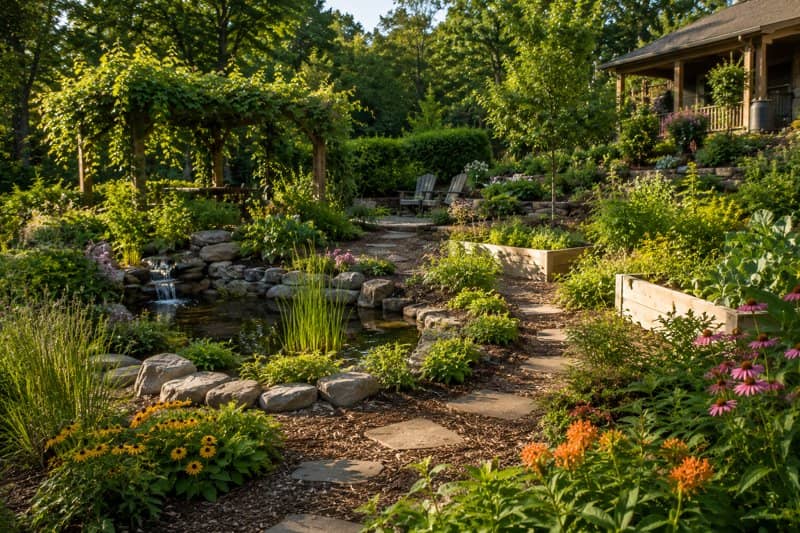
Aesthetics are often the main priority when designing a garden. A designer may choose plants for their color and shape, and tailor a professional softscape design and build to your convenience; the expectation is that regular maintenance will keep everything looking its best.
The challenge is that this approach often works against the natural systems already at play in the soil, across the landscape, and within the local climate, instead of taking advantage of them.
Permaculture offers a different way of thinking. Instead of forcing the landscape to fit a plan, it starts by observing how water moves, how soil biology functions, and how plant communities naturally support one another. The design is then built around those patterns, which makes your garden more resilient in changing conditions and much easier to maintain over the long term.
Healthy Soil Holds Everything Together
Healthy gardens start with healthy soil. In central Virginia, where heavy clay is common on many residential properties, the ground can compact easily from daily use, such as foot traffic or repeated rainfall. As soil compacts, water drains more slowly, and plant roots struggle to spread out. Plants may take longer to establish, yellow during wet periods, or develop a shallow root systems that leave them more vulnerable to drought and strong winds.
Permaculture improves compacted soil by building it from the ground up with organic matter. Compost, mulch, and cover crops slowly loosen dense soil, improve drainage, and encourage the biological activity that naturally supports healthy roots far more effectively than relying on synthetic fertilizers alone. Mycorrhizal fungi, earthworms, and beneficial soil microbes work together to retain moisture, release nutrients steadily, and create a stronger soil structure that resists erosion during heavy rain.
In Virginia’s climate, where the same soil may experience dry summers followed by wet winters, that healthy soil structure makes a real difference. Plants growing in biologically active, well-structured soil are better equipped to handle those changing conditions than plants rooted in depleted or compacted ground.
Work With How Water Moves on Your Property
One of the most practical benefits of permaculture is the way it manages water. Instead of sending rainwater off the property as quickly as possible, permaculture designs focus on slowing it down, spreading it across the landscape, and letting it soak into the ground where it can benefit the soil and surrounding plants.
Swales, which are shallow, level channels built along the contour of a slope, capture runoff and give water time to soak into the soil. Mulched pathways and planting beds absorb rainfall instead of allowing it to run off. Rain gardens placed in natural low areas collect and filter excess water before it reaches structures or neighboring properties.
None of these solutions is overly complicated, but each one responds to how water naturally moves across the site. Together they help reduce erosion, limit drainage problems around hardscape, and replenish soil moisture that plants rely on during dry weather.
Water problems usually develop slowly over time. A patio settles a little more each winter, a slope loses a bit more soil after every heavy rain, or a planting bed stays wet long enough for roots to begin failing. Because these changes happen gradually, they’re easy to overlook. Permaculture addresses these patterns at the landscape level, helping prevent problems instead of reacting to them one by one.
Plant Diversity Reduces Vulnerability
A garden that is made up of just one type of grass or a handful of repeated plant species is naturally more vulnerable. A single pest, disease, or stretch of severe weather can impact a large portion of the landscape all at once. Permaculture counteracts this pattern by encouraging biodiversity to create a healthier, more balanced ecosystem.
Layering plants with canopy trees, understory shrubs, groundcovers, and perennials creates a landscape where each part supports the others instead of competing for space. Trees help moderate temperature and reduce wind for the plants below. Groundcover protects the soil from compaction and moisture loss. Flowering perennials attract pollinators and beneficial insects that naturally help keep pest populations in check.
Native and climate-adapted plants provide the foundation for this kind of resilient design. In Virginia’s climate, plants like Virginia sweetspire, native serviceberry, bee balm, and wild ginger are already well-suited to local rainfall, soil conditions, and changing temperatures. They establish with less supplemental watering, handle both drought and heavy rain more effectively, and recover from seasonal stress with less maintenance than many non-native varieties.
A diverse garden not only performs better, but it also continues to improve as it matures. It offers more variety throughout the seasons, supports a wider range of wildlife, and adapts more naturally as local growing conditions change over time.
Choose Plants That Grow Into the Design
One of the biggest reasons residential gardens become expensive to maintain is that they’re often designed for how plants look at installation instead of how they’ll look years later. A shrub that fills a space perfectly in year two may start crowding the hardscape, competing with nearby plants, or outgrowing its spot by year six. That usually leads to constant pruning or replacing plants altogether, which starts the entire cycle over again. Every replacement also disturbs the soil and forces new plants to go through the establishment process from scratch.
Permaculture design takes a longer view by selecting plants based on their mature size and the role they’ll play within the landscape, not just how they look on planting day. A fruit tree positioned to provide shade over a seating area will naturally create that canopy as it matures. A hedging shrub chosen for its full-grown size won’t need heavy annual pruning to stay under control. A groundcover selected for its growth habit and soil preferences will fill a planting bed as intended instead of requiring constant attention to keep it in place.
This right-plant, right-place approach is what makes permaculture outdoor design and installation so effective at creating landscapes that become easier to care for over time instead of more demanding. As plants grow into their intended roles, the entire system becomes more stable. The soil improves, the canopy fills in, root systems grow deeper, and the garden gradually becomes a landscape that works with nature instead of constantly needing human intervention.
A Resilient Garden Requires Less
One of the first benefits of permaculture that most homeowners notice is that a garden designed around natural systems takes less work to maintain.
Healthy soil reduces the need for fertilizer. A layered mix of plants does a much better job of suppressing weeds than bare soil or sparse plantings. Native plants are also better adapted to central Virginia’s summers, so they require less supplemental watering and fewer seasonal treatments than other, more exotic varieties.
The landscape is more adaptable over time. When a garden is designed to work with local conditions, it’s better able to withstand wet seasons, dry spells, and changing temperatures without losing its balance. Instead of constantly trying to restore the landscape after every weather event, you’re working with a system that’s built to recover on its own.
Those differences become more noticeable as your garden matures. During the first few years, a permaculture-designed landscape needs much of the same care as any newly planted garden. By the third or fourth year, as root systems expand and soil biology becomes established, maintenance naturally decreases. Mulch breaks down and enriches the soil. Plants grow into their intended roles. Groundcovers fill in and crowd out weeds with little intervention. By supporting plant health through healthy soil and biodiversity, the landscape also relies less on chemical inputs, creating a non-toxic, family-friendly outdoor space.
Designing With the Long View
Permaculture isn’t a quick fix or the latest landscaping trend. It’s a thoughtful approach to creating a garden that becomes healthier and more resilient as it matures. Over time, the soil improves, plant communities become established, and water moves through the landscape more naturally and efficiently.
If creating a permaculture haven in your outdoor space sounds appealing, you should find a top tier luxury landscaping and design company in central Virginia who can bring intentional, systems-based thinking to your project. From evaluating your soil and selecting the right plants to providing ongoing seasonal maintenance, they can help create outdoor spaces that continue to grow stronger, healthier, and more beautiful.